What does charro mean?
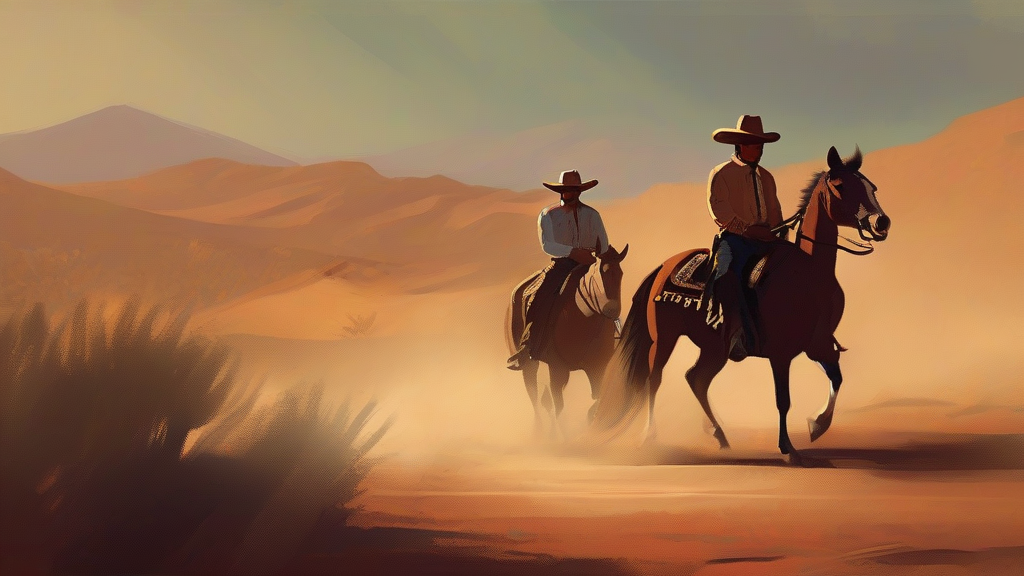
A charro is a Mexican horseman — the rider-cowboy at the heart of charrería, Mexico's traditional equestrian culture and its recognized national sport. Charros are celebrated for their horsemanship, roping skills, and above all their striking costume: tightly fitted trousers with rows of silver buttons, an embroidered short jacket, a broad sombrero, and often elaborately worked saddles and spurs. The word also describes this distinctive style of dress itself, so one can speak of a 'charro suit' worn by mariachi musicians as well as by riders. Borrowed into English from Mexican Spanish, the term evokes pride, pageantry, and rural heritage rather than serving as a neutral label for any working cowboy. In English it appears most often in writing about Mexican festivals, rodeo-like charreadas, mariachi music, and regional cuisine, where dishes described as 'a la charro' carry its rustic, festive associations.
A Mexican horseman or cowboy, especially one skilled in the riding and roping events of charrería.
"A champion charro roped the wild mare in a single practiced throw."
In English, typically reserved for the Mexican cultural context rather than used generically for cowboys.
The ornate traditional costume associated with such horsemen, featuring embroidered jackets, buttoned trousers, and a wide sombrero.
"The trumpeter wore a charcoal-gray charro trimmed in silver embroidery."
Regular English plural, following standard patterns for borrowed nouns ending in -o.
"Dozens of charros rode out at dawn to open the celebration."
Mexico's national sport isn't soccer — it's charrería, the centuries-old riding tradition of the charro.
Reviewed by Deb Chak, Editor. AI-assisted content curated by RJS Tech Solutions LLP.
Etymology of charro
'Charro' entered English from Mexican Spanish, where it has long denoted the horsemen of the countryside and their distinctive costume. Its deeper origins within Spanish are uncertain; some scholars connect it to earlier Spanish dialect words for a rustic country person, but no single source has been firmly established. In modern use it is inseparable from charrería, the organized equestrian tradition that grew up around these riders, and related borrowings such as 'charrería' and 'charreada' have followed it into English.
Related word forms
How charro is actually used
Borrowed directly from Mexican Spanish and usually italicized in careful British usage, though increasingly unitalicized in American English. It carries strong cultural connotations of Mexican national heritage rather than being a generic synonym for 'cowboy.'
Easily confused with charro
A vaquero is a broader term for a Spanish-speaking cowboy or herdsman, while a charro specifically refers to a Mexican horseman associated with charrería and its distinctive formal attire.