
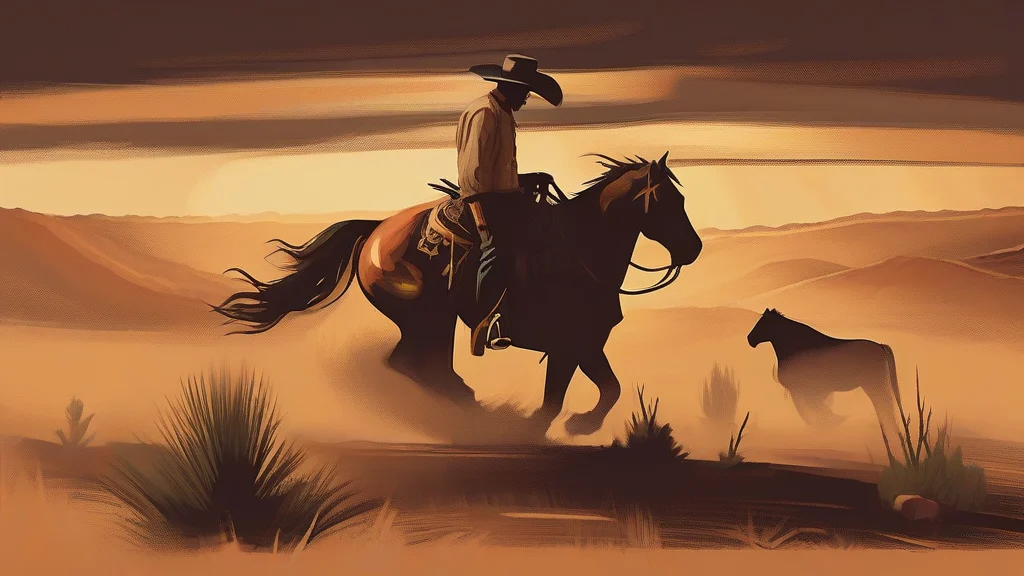
What does vaquero mean?
A vaquero is a cowboy or cattle herder, particularly one associated with the ranching cultures of Mexico and the southwestern United States. The word often suggests more than merely riding horses: a vaquero may be understood as a skilled cattle worker who knows how to herd, manage, and control livestock across open country. In English, vaquero can function as a synonym for cowboy, but it retains a distinctly Spanish and Mexican cultural association. This makes it especially useful when discussing vaquero traditions, clothing, music, and the history of cattle ranching in the Americas. The term came into English from Spanish and ultimately derives from a Latin word for a cowherd. For readers seeking a general term for a Western cattle hand, cowboy is more familiar; for one emphasizing the Spanish heritage of the tradition, vaquero is the more precise and evocative choice.
nounA cowboy or cattle herder, especially one belonging to the Spanish ranching traditions of Mexico and the southwestern United States.
- A cowboy, cattle herder, or skilled ranch hand, especially in Mexico or the southwestern United States.
"An experienced vaquero guided the cattle safely across the open range."
"The vaquero remained on horseback while the herd crossed the dry riverbed."
"The museum's exhibition explores the history and cultural influence of the vaquero in the American Southwest."
The plural is formed by adding -s; the final -o is retained.
"Several vaqueros drove the cattle toward the mountain pasture."
A vaquero is more than a cowboy: the word carries the rich Spanish-language tradition of cattle ranching across Mexico and the American Southwest.
Reviewed by Deb Chak, Editor. AI-assisted content curated by RJS Tech Solutions LLP.
Where does vaquero come from?
Vaquero comes from Spanish vaquero, a word for a cowherd or ranch hand. Spanish borrowed it from Latin vacuārius, an agent noun meaning “cowherd,” which was formed from vacca, the Latin word for “cow.” Related forms include Spanish vacuno and vaquería, while English vaccine reflects the same Latin cattle root through a different historical development.
How vaquero is actually used
The term is especially common in discussions of Mexican, Mexican-American, and Southwestern American ranching. In general American English it can serve as a synonym for cowboy, but it more strongly evokes Spanish-language cattle-ranching traditions. It is relatively uncommon in British English.