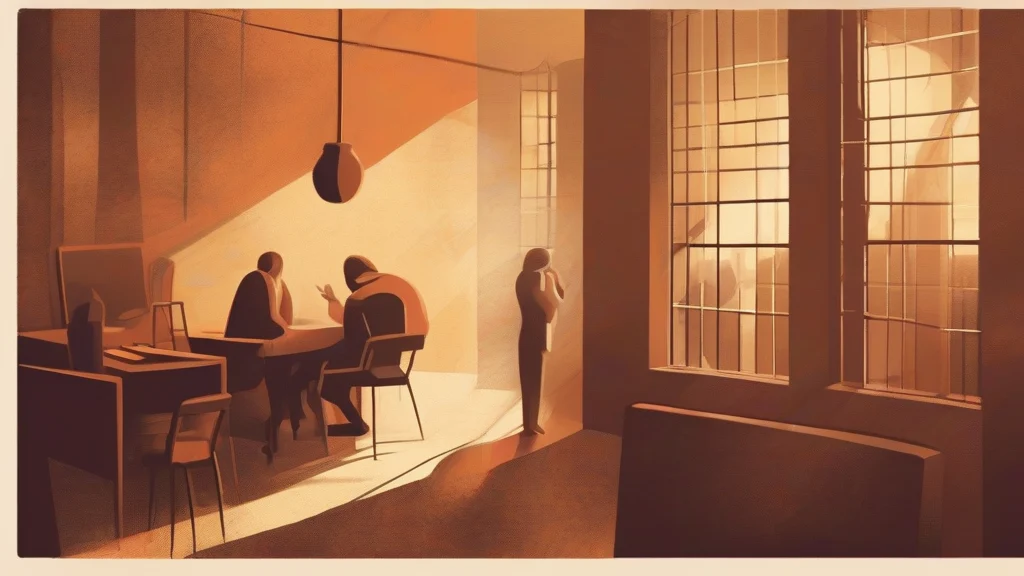
What does chatter mean?
Chatter describes rapid, continuous talk — typically light, casual, and focused on matters of little importance — as well as any series of quick, repeated clicking or rattling sounds. As a verb, it covers both senses: friends may chatter over coffee, while teeth chatter in the cold or monkeys chatter in the trees. As a noun, it names both the talk itself ('the chatter of the marketplace') and the sound ('the chatter of a sewing machine'). The word is informal in register and, when applied to human speech, often carries a faint suggestion that the conversation lacks depth or purpose. Its most famous fixed pairing is 'idle chatter.' A related derivative, 'chatterbox,' affectionately labels someone who talks constantly. Versatile and vividly onomatopoeic, chatter captures one of the most familiar textures of everyday life: the ceaseless background hum of voices and sounds.
To talk rapidly and at length about trivial or unimportant matters; also, to make a series of quick, sharp, repeated sounds, as teeth do from cold or fear, or as certain birds and machines do.
"They chattered excitedly about the match all the way home."
Often used with 'away' (chatter away) to emphasize continuous talking.
Rapid, informal, or idle talk about unimportant things; also, a series of short, quick clicking or rattling sounds.
"The constant chatter of the newsroom made concentration impossible."
When your teeth 'chatter,' they're doing exactly what gossiping friends do — only much faster.
Reviewed by Deb Chak, Editor. AI-assisted content curated by RJS Tech Solutions LLP.
Etymology of chatter
Chatter is an imitative word of Germanic origin, formed by echoing the repetitive sounds it describes. It is related to similar expressive formations in other Germanic languages, such as Dutch 'koeteren' and German dialect forms, all built on the same idea of rapid, repetitive noise. It has been part of English since at least the Middle English period, and its dual application — to human speech and to mechanical or animal sounds — has been stable throughout its history.
Related word forms
How chatter is actually used
Chatter is generally informal and often carries a mild connotation of triviality or aimlessness when applied to speech — 'chatter' can subtly suggest that what is being said lacks substance. Applied to animals (monkeys, birds) or objects (teeth, machine tools), it is neutral and purely descriptive. The verb is common in both British and American English, though the informal noun sense for 'a chat' is more characteristically British.
Easily confused with chatter
Clatter refers to a loud rattling noise of hard objects (like dishes falling), while chatter refers to rapid talk or clicking sounds, often of voices, teeth, or machinery.