What does chenar mean?
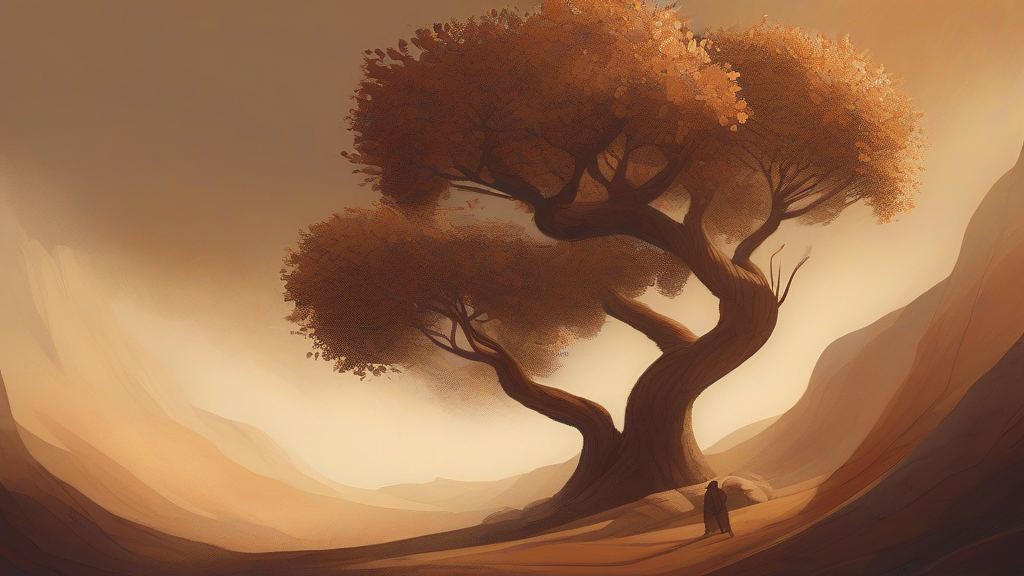
A chenar is the Oriental plane tree (Platanus orientalis), one of the most celebrated shade trees of western and southern Asia. Native to the eastern Mediterranean region and naturalized across Persia, Central Asia, and the Indian subcontinent, it grows into an enormous, long-lived tree with palmate leaves and distinctive patchwork bark. In Kashmir, where vast chenars line lakesides, gardens, and village squares, the tree holds near-iconic status: its autumn foliage draws admirers each year, and mature specimens are legally protected. The word entered English through Persian (chinar), and appears chiefly in literary, historical, and travel contexts rather than everyday conversation. Writers reach for it when evoking Mughal gardens, caravan routes, or the dappled light of an old courtyard. For readers, "chenar" signals not just a species of plane tree but a whole cultural landscape in which these trees stand as living landmarks.
nounThe Oriental plane tree (Platanus orientalis), a large deciduous tree native to the eastern Mediterranean and western Asia, prized for its broad shade and attractive mottled bark.
- The Oriental plane tree (Platanus orientalis), especially as grown in Kashmir, Iran, and Central Asia.
"The village square was shaded by a centuries-old chenar whose branches spread over the entire fountain."
"Autumn turned the chenars along the Dal Lake shoreline into walls of crimson and gold."
"Travelers rested their horses beneath a giant chenar that had stood at the crossroads for three hundred years."
The regular plural "chenars" is standard; the unmarked form "chenar" sometimes appears as a collective.
"The avenue was planted with rows of stately chenars."
Kashmir's beloved chinar trees are so protected by law that even cutting a dead one can land you in court.
Reviewed by Deb Chak, Editor. AI-assisted content curated by RJS Tech Solutions LLP.
Etymology of chenar
The word comes from Persian chenār (چنار), the standard Persian name for the Oriental plane tree. It was borrowed into English during the period of British engagement with India and Persia, appearing in colonial-era travel and botanical writing. The variant spelling "chinar" reflects Urdu and Kashmiri usage and is now common in South Asian English. The Persian term itself has no well-established Indo-European cognates used in English.
How chenar is actually used
"Chenar" is a literary and regional borrowing, encountered most often in travel writing and historical prose about Iran, Kashmir, and Central Asia. In South Asian English the spelling "chinar" predominates. The plural is usually "chenars," though "chenar" occasionally functions as a collective or unchanged plural.
Easily confused with chenar
"Chinar" is simply an alternative spelling of the same word for the Oriental plane tree, more common in South Asian English, while "chenar" is the transliteration closer to the original Persian.
"Chenille" is a fuzzy fabric or yarn named after the French word for caterpillar, whereas "chenar" is a tree.