What does cheviot mean?
Cheviot is a noun with two closely related senses: first, a distinctive breed of hardy white-faced sheep that originated in the Cheviot Hills, the rolling uplands along the border between England and Scotland; second, the woolen fabric — often a rough-surfaced tweed — woven from the fleece of these sheep or from wool of similar quality. In agriculture and livestock circles, cheviot denotes the animal itself, admired for its stamina on exposed hill pastures and the quality of its fleece. In tailoring and menswear, cheviot refers to the cloth: a firm, durable worsted or woollen suiting material with a slightly napped surface, favored for country suits, jackets, and outdoor garments where hard wear matters more than polish. The word carries connotations of rural tradition, practicality, and understated British craftsmanship. It is most commonly encountered in contexts of farming, textile manufacture, and classic clothing.
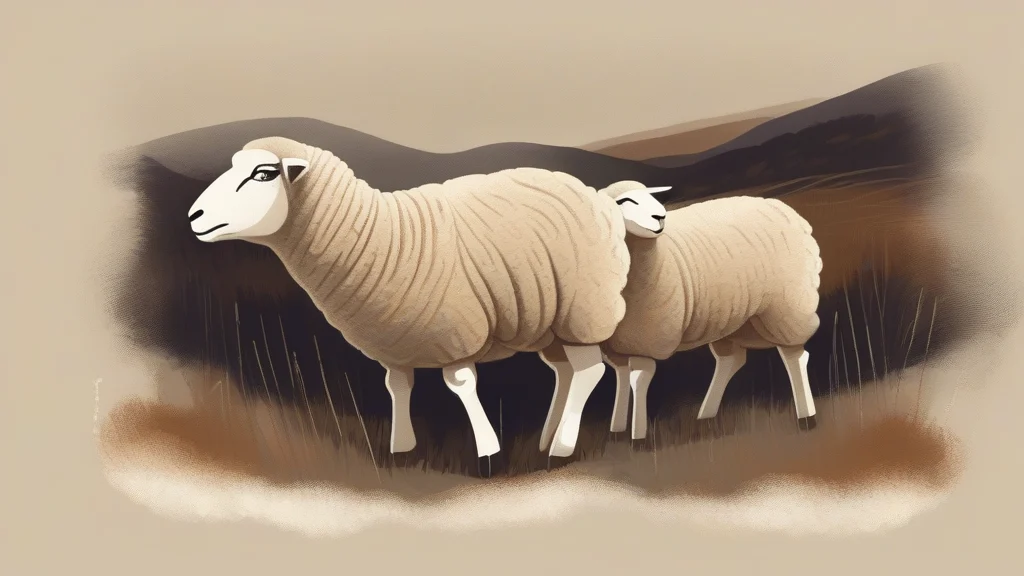
A hardy breed of white-faced sheep originating in the Cheviot Hills, raised chiefly for its wool and meat.
"The flock of cheviots grazed steadily across the windswept hillside."
Often capitalized when referring specifically to the breed in pedigree or agricultural registers.
A woolen fabric or tweed, typically firm and durable with a slightly napped finish, made from the wool of the Cheviot sheep or similar wool.
"Her winter coat was tailored from a fine Scottish cheviot."
Commonly used attributively, as in 'a cheviot suit' or 'cheviot cloth'.
Used when referring to multiple animals of the breed; the fabric sense is normally uncountable.
"The farmer kept several hundred cheviots on the high pasture."
Named after the misty hills straddling the England–Scotland border, this rugged sheep's wool became so prized that 'cheviot' now names the very fabric it wears.
Reviewed by Deb Chak, Editor. AI-assisted content curated by RJS Tech Solutions LLP.
Etymology of cheviot
The word cheviot derives from the Cheviot Hills on the Anglo-Scottish border, where the sheep breed was developed. The place-name itself is of uncertain origin, though it is generally considered ancient and possibly pre-English (Celtic) in derivation. The term was applied to the sheep breed and subsequently to the cloth made from its wool, entering general English use in the 18th and 19th centuries as the breed's reputation spread beyond its native hills.
How cheviot is actually used
When capitalized as 'Cheviot', the word usually refers to the hills themselves or to the sheep breed in formal agricultural contexts; lowercase 'cheviot' is standard for the fabric in tailoring and menswear.
Easily confused with cheviot
Chervil is an aromatic herb used in cooking, while cheviot is a breed of sheep or the woolen cloth made from its fleece.