
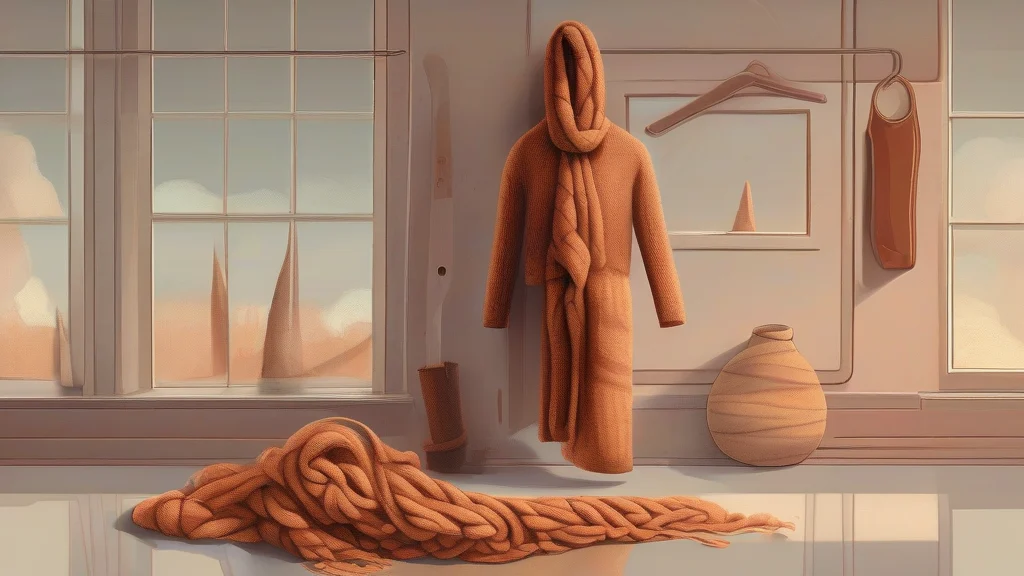
What does worsted mean?
Worsted is a traditional woolen yarn and fabric made from long, tightly spun fibers, producing a smooth, durable material commonly used for suits, trousers, and other tailored clothing. The word can stand for the material itself, as in “a suit of worsted,” or function as an adjective meaning made from it, as in “worsted wool.” It is more specific than the general terms wool or woolen: worsted is associated with a fine, compact, smooth-surfaced fabric rather than the broader range of woolen goods. The word also has an archaic verbal sense meaning “to make worse,” as in “the delay worsted the situation.” Its history is especially memorable because the material was named after Worsted, a village in Norfolk whose woolen manufacture became nationally renowned. The fabric and the verb have different etymological origins, making worsted an unusual word in which a single spelling preserves two separate histories.
A fine, smooth woolen yarn or cloth made from long, tightly spun fibers, traditionally valued for its durability.
"The coat was made from a dark grey worsted."
Often used as a mass noun for the material, though the plural worsteds is also possible when individual pieces or kinds of worsted are discussed.
Made of or relating to fine, smooth woolen material.
"He wore a worsted jacket to the ceremony."
More specific than woolen, since it identifies a particular smooth and closely woven wool material.
Archaic: to make worse; to worsen.
"The delay only worsted the situation."
This sense is archaic or literary and is unrelated in origin to the noun and adjective denoting woolen material.
Worsted is usually used as a mass noun; the plural is uncommon and is chiefly used when referring to separate items or kinds of the material.
"The shop sells several worsteds in shades of brown and charcoal."
Worsted names both a smooth woolen fabric associated with a Norfolk village and, in archaic English, a verb meaning “to make worse”—two unrelated histories in one spelling.
Reviewed by Deb Chak, Editor. AI-assisted content curated by RJS Tech Solutions LLP.
Where does worsted come from?
The noun and adjective derive from Worsted, a village in Norfolk whose woolen manufacture became renowned; the name of the material eventually came to stand for the finished yarn and cloth. These forms are historically separate from the verb, which is based on worse or worst, ultimately continuing Old English wiersa, meaning “worst,” from a Germanic root.
How worsted is actually used
Worsted denotes a particular kind of smooth, closely woven wool material and should not be used as a general synonym for all wool fabric. The verb sense is archaic and literary, although it may occur in older writing. In British usage, the first syllable is generally pronounced as the vowel in bird; in American usage it commonly has the same vowel as the word bird.
Easily confused with worsted
Worst is the standard superlative of bad, whereas worsted usually denotes a traditional woolen yarn or cloth; the two are otherwise unrelated in their historical origins.