What does chibouk mean?
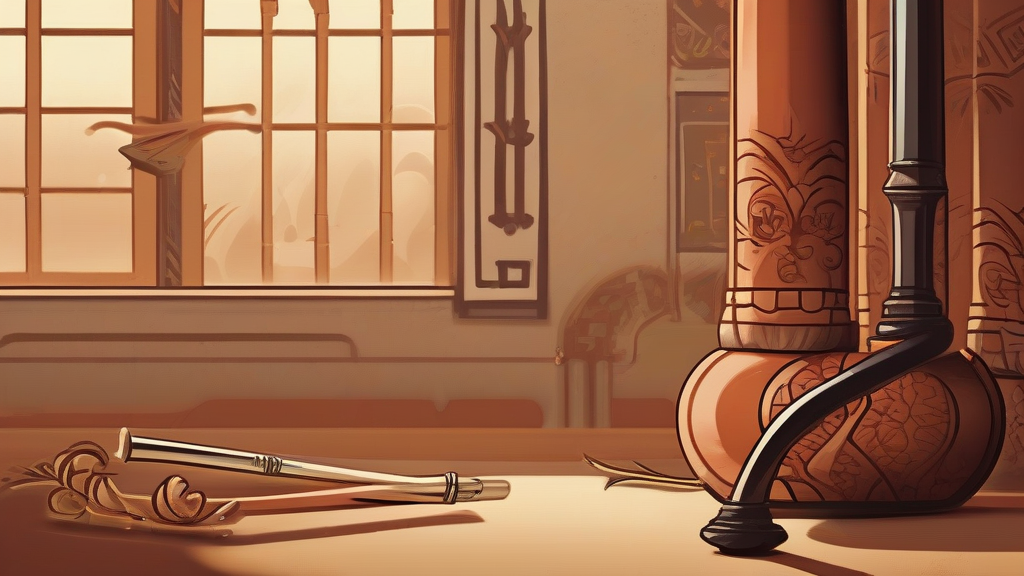
A chibouk is a long-stemmed tobacco pipe of Turkish origin, traditionally fitted with a small clay bowl at one end of an often richly decorated wooden tube. Its great length — sometimes several feet — served both a practical purpose, cooling the smoke before it reached the smoker's mouth, and a ceremonial one, since elaborate chibouks were symbols of status and hospitality in Ottoman society. The word entered European languages during the era of Orientalist travel writing, when writers frequently described sultans, pashas, and coffeehouse patrons smoking their chibouks. Today the term survives chiefly in historical and literary contexts, evoking the leisurely rituals of the nineteenth-century Ottoman world. Though now largely obsolete in everyday speech, it remains a vivid piece of vocabulary for anyone writing about Turkish culture, period fiction, or the global history of tobacco.
nounA long-stemmed Turkish tobacco pipe, traditionally made of wood and often ornamented, smoked by drawing the smoke through the long tube.
- A long-stemmed Turkish tobacco pipe, typically with a clay or wooden bowl and an often ornately decorated tube.
"The pasha reclined on cushions, puffing thoughtfully at an ornate chibouk."
"In the coffeehouse the elders passed the afternoon in conversation, each with his own chibouk resting against the divan."
"She bought a carved wooden chibouk as a souvenir of her travels through Istanbul."
Regular plural formation; the anglicized spelling is standard even though the Turkish source ends in -k pronounced differently.
"The walls of the old café were lined with hooks from which dozens of chibouks hung."
The chibouk's stem was so long that smokers needed an attendant just to hold it within reach — smoking as an act of leisure taken literally.
Reviewed by Deb Chak, Editor. AI-assisted content curated by RJS Tech Solutions LLP.
Etymology of chibouk
The word "chibouk" comes from the Turkish "çubuk," meaning a stick or rod, a fitting name for a pipe defined by its long stem. It entered English in the early seventeenth century through travelers' accounts of the Ottoman Empire, where the pipes were ubiquitous. The variant spelling "chibouque" also appears in older English texts.
How chibouk is actually used
"Chibouk" is a rare, literary word today, found mainly in historical writing, travel literature, and descriptions of Ottoman life. It is sometimes spelled "chibouque." It should not be confused with a hookah or narghile, which are water pipes; the chibouk is a dry pipe whose length cools the smoke.
Easily confused with chibouk
A chibol is a young onion or shallot, whereas a chibouk is a Turkish tobacco pipe.