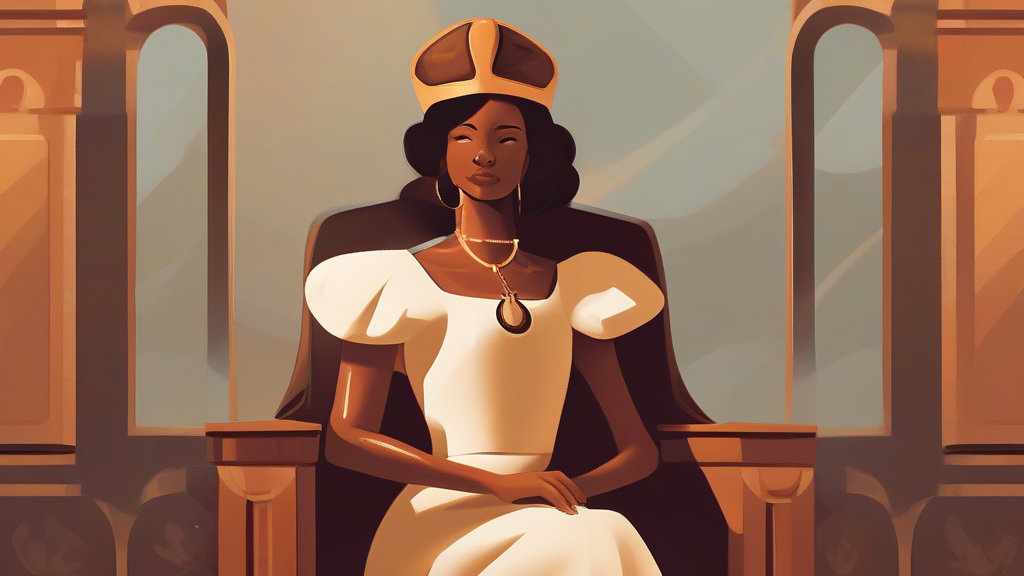
What does chiefess mean?
A chiefess is a woman who serves as a chief — the recognized leader of a tribe, clan, village, or similar community — or, by extension, a woman who heads an organization or undertaking. The word is formed by adding the feminine suffix '-ess' to 'chief', following a once-productive pattern in English that also produced terms like 'actress' and 'princess'. While perfectly intelligible, 'chiefess' is now uncommon and carries a slightly dated or literary flavour; modern English overwhelmingly favours the gender-neutral 'chief' or 'chieftain' regardless of the officeholder's sex. The term retains value in historical and ethnographic contexts, where it usefully signals that a community recognized women in formal positions of authority, and it can still lend deliberate emphasis to female leadership in narrative or descriptive prose.
nounA woman who is the chief or leader of a group, organization, tribe, or people; a female head or director.
- A woman who holds the position of chief, especially the leader of a tribe, clan, or community.
- More broadly, a woman who is the head or director of an organization or enterprise.
"The chiefess of the village welcomed the delegation with a traditional ceremony."
"Under the guidance of a respected chiefess, the tribe negotiated peace with its neighbours."
"She proved herself a capable chiefess, steering the company through its most difficult year."
The standard plural follows regular English noun pluralization, adding '-es'.
"Several chiefesses attended the inter-tribal gathering."
When English needed a word for a woman in charge, it simply bolted its favorite feminine ending onto 'chief' — and 'chiefess' has been quietly marking female leadership ever since.
Reviewed by Deb Chak, Editor. AI-assisted content curated by RJS Tech Solutions LLP.
Etymology of chiefess
'Chiefess' derives from 'chief', which entered Middle English from Old French 'chef' (meaning head or leader), itself from Latin 'caput', meaning head. The feminine suffix '-ess', borrowed into English via Old French from Late Latin '-issa', was attached in the same way that produced 'princess' and 'empress'. The compound thus follows a well-established pattern of forming feminine titles in English, though it never achieved the currency of those counterparts.
How chiefess is actually used
'Chiefess' is relatively rare and somewhat archaic in modern usage; in most contemporary contexts, gender-neutral terms such as 'chief', 'leader', or 'chieftain' are preferred. The word survives chiefly in historical, anthropological, or literary writing, and in reference to cultures where female hereditary leadership is specifically noted.
Easily confused with chiefess
'Chieftain' is the standard, gender-neutral term for a leader or head of a clan or tribe, whereas 'chiefess' explicitly denotes a woman holding that role.