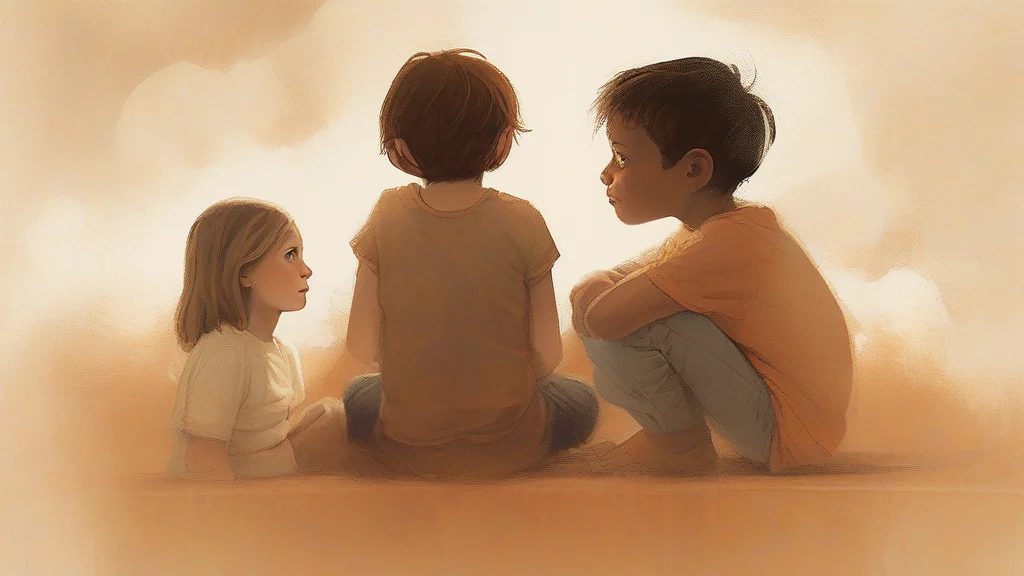
What does children mean?
Children is the plural of child and refers to young human beings who have not yet reached puberty or the legal age of majority, though it also embraces sons and daughters of any age when described in relation to their parents. It is one of a handful of English nouns that preserve the ancient Old English -en plural, alongside oxen and brethren, making it a small living fossil of the language's history. The word carries warm, protective connotations in everyday speech and appears constantly in contexts ranging from education and medicine to law and literature, where phrases such as "women and children first" reflect long-standing cultural instincts to shield the young. Because it is plural-only, writers must pair it correctly: there is no such form as "childrens," and the singular must revert to "child." Informal equivalents include "kids" and "little ones," while legal prose often prefers "minors." Its enduring centrality makes it one of the most familiar and emotionally charged words in English.
Plural of child: young human beings below the age of puberty or legal majority.
"The park was full of children enjoying the summer afternoon."
Sons and daughters of any age in relation to their parents.
"Her children visited her every Sunday, even after they had families of their own."
"Children" is a plural-only noun and never takes -s; the erroneous "childrens" should always be avoided.
"Three children were waiting at the bus stop."
"Children" preserves one of the last surviving Old English plural endings in modern English — the rare -en suffix shared almost only with "oxen" and "brethren".
Reviewed by Deb Chak, Editor. AI-assisted content curated by RJS Tech Solutions LLP.
Etymology of children
Children comes from Old English cild, whose origin beyond Germanic is uncertain. In Old English the plural was typically cildru or cildra, but by the late Middle English period a new plural formed with the -en suffix produced children, which became standard. The same Germanic root lies behind related words such as childhood and childish, and it survives as a cognate in German Kind, from which "kindergarten" derives.
How children is actually used
"Children" is a plural-only noun — it never takes an -s, and there is no singular form "childrens." In formal or legal contexts, "minors" may replace it; informally, "kids" is the common equivalent. Referring to adult offspring, "children" remains correct and neutral.
Easily confused with children
"Chidden" is an archaic past participle of the verb "chide" (to scold); despite its similar sound, it has nothing to do with offspring.