What does chiminea mean?
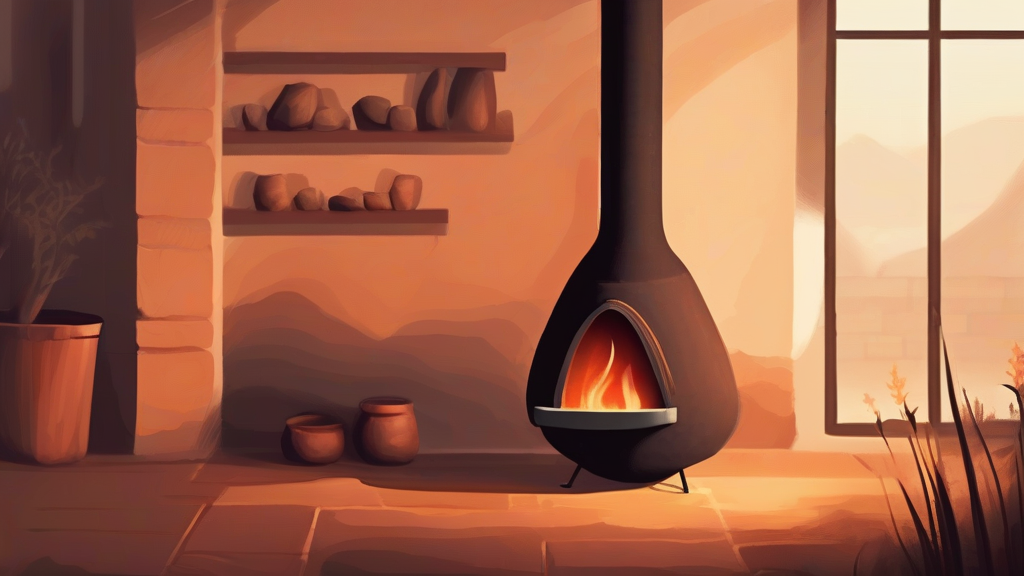
A chiminea is a freestanding outdoor fireplace, typically crafted from clay, terracotta, cast iron, or steel, distinguished by its bulbous, pot-like body, a front opening into which fuel is loaded, and a narrow vertical chimney that draws smoke up and away from seated guests. Originating from traditional Mexican ovens and heaters, chimineas became widely popular in North America and Europe from the late twentieth century onward as decorative and functional patio features. They are used to provide warmth, ambient light, and sometimes cooking capability during outdoor gatherings, and they carry cozy, convivial connotations of evenings spent around a fire. The plural is chimineas, though the alternative spelling chimenea is also well established. Because the word derives from the Spanish term for a chimney, it neatly describes the very feature that sets this design apart from a flat fire pit.
nounA freestanding outdoor fireplace, typically made of clay or cast iron, with a bulbous, round-bodied base and a narrow vertical chimney or flue for directing smoke upward.
- A freestanding outdoor heater or fireplace, usually of clay or metal, with a rounded body, front opening, and upright chimney.
"On cool autumn evenings we gather around the chiminea on the patio, roasting marshmallows over its open mouth."
"A clay chiminea kept everyone warm long after the sun went down."
"They placed the cast-iron chiminea in the corner of the garden, safely away from overhanging branches."
Standard English plural; when spelled 'chimenea', the plural is 'chimeneas'.
"Several chimineas were arranged along the terrace, each glowing with its own fire."
The word for your backyard fire pit literally means 'chimney' in Spanish — the bulbous Mexican oven that conquered British patios.
Reviewed by Deb Chak, Editor. AI-assisted content curated by RJS Tech Solutions LLP.
Etymology of chiminea
Chiminea was borrowed from Spanish chimenea, meaning 'chimney', which itself descends from Late Latin caminata, a derivative of caminus ('furnace, forge'), ultimately from Greek kaminos. The word entered general English usage through the popularity of Mexican clay fireplaces, becoming widespread in garden retail from the late twentieth century. It shares its ultimate root with the English word chimney, which came through Anglo-Norman and Old French rather than directly from Spanish.
How chiminea is actually used
Informal to neutral register, used chiefly in gardening, patio-furniture, and home-improvement contexts. The spellings 'chiminea' and 'chimenea' are both common, reflecting the Spanish source word; 'chiminea' is the more frequent anglicized spelling in retail use.
Easily confused with chiminea
A chimera is an imaginary monster or an impossible illusion, while a chiminea is a real outdoor fireplace; the two share similar sounds but nothing else.