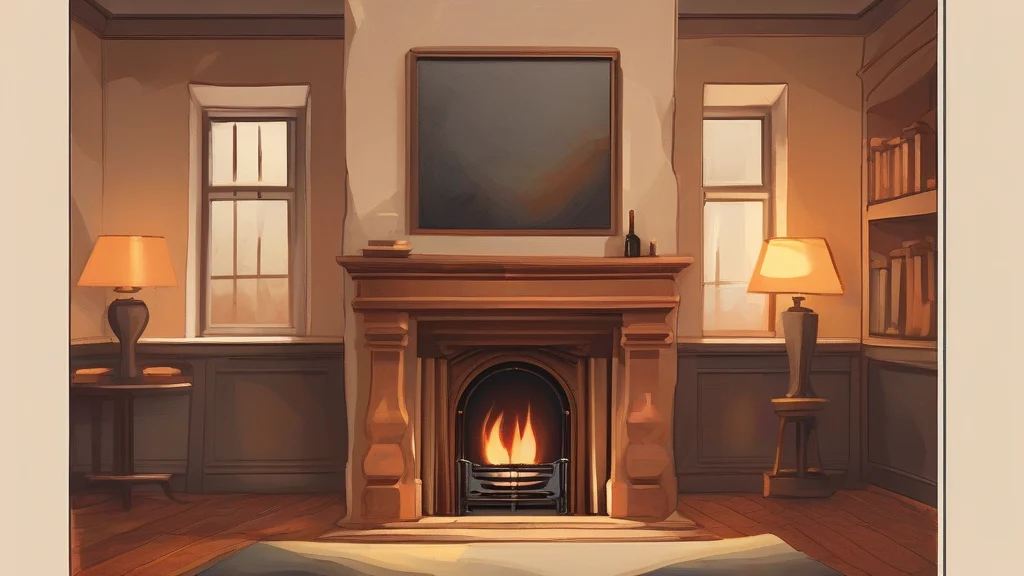
What does chimneypiece mean?
A chimneypiece is the ornamental structure that surrounds the opening of a fireplace, combining the mantelshelf above with the jambs, frieze, and overmantel that frame it. Typically crafted from stone, marble, slate, or carved wood, it serves both a practical purpose — protecting the wall from heat and providing a shelf for ornaments — and a decorative one, often acting as the focal point of a room. The word is chiefly British; American usage prefers "mantelpiece" or simply "mantel." Chimneypieces are especially significant in the study of historic interiors, where their style can date a building: Georgian marble examples, Tudor stone arches, and Victorian cast-iron designs are each highly distinctive. In property sales and conservation work, an original period chimneypiece is prized as a feature worth preserving or restoring, sometimes even fetching high prices at salvage auctions when removed from demolished houses.
nounA decorative structure surrounding a fireplace, comprising the mantelshelf and the framework above it, typically of stone, marble, or wood.
- The decorative framework around a fireplace opening, including the mantelshelf over it.
"The marble chimneypiece in the drawing room dated from the 1780s and dominated the entire wall."
"The auction catalogue described the carved oak chimneypiece as dating from about 1700."
"She rested her elbows on the chimneypiece and gazed into the fire."
Standard plural; used when referring to multiple examples, e.g. across different rooms or buildings.
"The surveyor noted that all four chimneypieces on the ground floor were original."
In estate agents' listings, an original Georgian 'chimneypiece' can add thousands to a house's value — it's the one piece of architecture people literally gather around.
Reviewed by Deb Chak, Editor. AI-assisted content curated by RJS Tech Solutions LLP.
Etymology of chimneypiece
The word combines "chimney," which entered Middle English from Old French "cheminée" (from Late Latin "caminata," a hearth-room), with "piece," from Old French "piece," meaning a part or fragment. It arose in English in the late medieval and early modern period to denote the finished masonry or joinery framing a fireplace opening. Its deeper root traces back to Greek "kaminē," meaning a furnace or oven, which also gave Latin "caminus" and ultimately cognates such as French "cheminée."
How chimneypiece is actually used
The term is chiefly British; American English more commonly uses "mantelpiece" or "mantel". It belongs largely to architectural, historical, and interior-design contexts rather than everyday speech.
Easily confused with chimneypiece
A chimney is the flue or shaft that carries smoke away, whereas a chimneypiece is the ornamental structure built around the opening of the fireplace inside a room.