
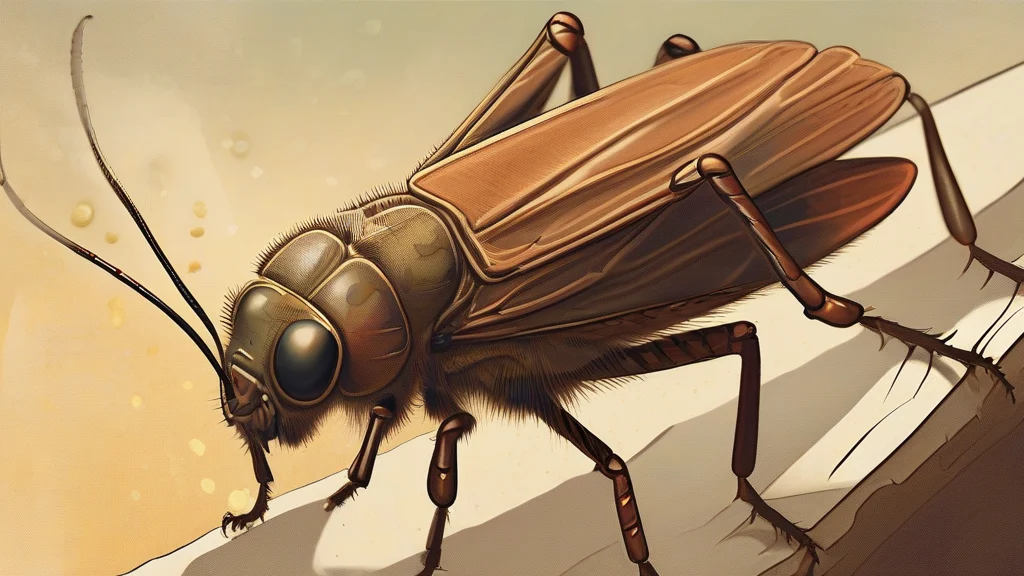
What does chirred mean?
"Chirred" is the past tense and past participle of the verb "chirr," meaning to produce a prolonged, harsh, trilling sound of the kind made by grasshoppers, crickets, and cicadas when they rub their wings or legs together. The word belongs to a small family of imitative English verbs — alongside "whirr," "churr," and "chirrup" — coined to mimic distinctive natural sounds. It is used almost exclusively in literary and descriptive contexts, where it evokes the drowsy, pulsing background noise of a hot summer field or meadow, though writers occasionally extend it to mechanical sounds of a similar droning quality, such as a distant motor or an old appliance. Because it is rare outside nature writing, "chirred" lends prose a deliberate, textured quality: choosing it signals attention to sound itself. For readers, encountering it is a reminder that English has finely graded vocabulary even for noises we usually ignore — the difference between a bird's chirp and an insect's chirr is real, and this word preserves it.
verbPast tense and past participle of "chirr" — to make a harsh, trilled, buzzing sound like that of a grasshopper or cicada.
- (of insects, especially grasshoppers and cicadas) To make a prolonged, harsh, trilling or buzzing sound by stridulation.
- (by extension) To make any similar low, vibrating or whirring sound.
"The grasshoppers chirred in the dry grass as the evening cooled."
"Cicadas chirred relentlessly through the heat of the afternoon."
"The old fan chirred faintly in the corner of the quiet room."
Before there were engines to imitate, English speakers reached for one word to capture the grasshopper's drone: it didn't sing or hum — it chirred.
Reviewed by Deb Chak, Editor. AI-assisted content curated by RJS Tech Solutions LLP.
Etymology of chirred
First recorded in the early seventeenth century, "chirr" is onomatopoeic in origin, formed directly in imitation of the stridulating sound of insects. It sits within a cluster of similar imitative forms — including "churr" (the nightjar's call), "chirrup," and "whirr" — that arose independently in English to capture distinct natural noises rather than descending from a single shared root. The verb has remained stable in form and sense since its coinage.
Related word forms
How chirred is actually used
Literary and somewhat rare; "chirr" appears chiefly in descriptive nature writing rather than everyday speech. It carries a warm, pastoral connotation of summer heat and countryside.
Easily confused with chirred
"Chirped" refers to the short, sharp sounds of birds or small creatures, while "chirred" denotes a longer, harsher, continuous trill such as an insect's stridulation.
"Churred" is the past tense of "churr," the low purring call of a nightjar, whereas "chirred" describes the high insect-like trill of "chirr."