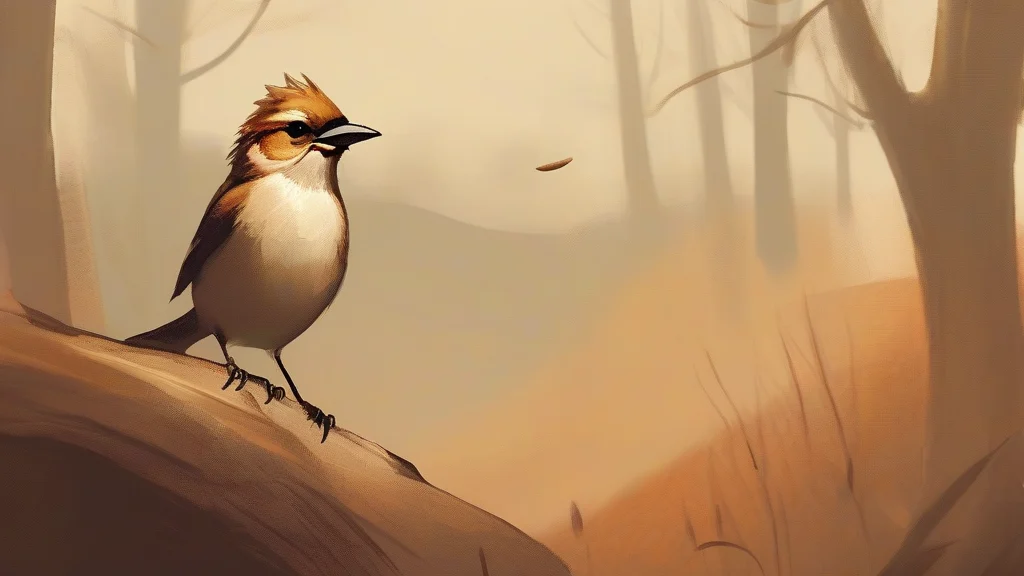
What does chirrup mean?
Chirrup is an expressive English verb describing the short, high-pitched, rapidly repeated sounds made by small birds and insects such as crickets. It is closely related to — and essentially a variant of — the more common word 'chirp', though it carries a slightly richer, more textured feel, often suggesting a continuous trill of sound rather than a single note. By natural extension, chirrup can also describe human speech delivered in a bright, cheerful, high-pitched voice, as when someone greets a friend with evident delight. The word is onomatopoeic in origin, its form directly echoing the sound it names, and it has been part of English since the early modern period. Somewhat literary in register, chirrup appears most often in descriptive prose about nature and countryside, where writers prize it for its precision and its musicality. For anyone writing vividly about birdsong or animated conversation, it offers a charming alternative to plainer synonyms.
To utter a series of short, high-pitched chirping sounds, as small birds and some insects do.
"Wrens chirruped busily among the garden shrubs."
To speak in a lively, cheerful, high-pitched voice.
""It's a lovely day," she chirruped."
Almost always connotes warmth and good spirits when used of people.
A short, high-pitched chirping sound.
"He was woken by the soft chirrup of sparrows under the eaves."
As a noun, the plural 'chirrups' refers to multiple instances of the chirping sound.
"The dawn chorus filled the valley with countless chirrups and trills."
Before alarm clocks existed, people woke to the gentle chirrup of sparrows — a word so onomatopoeic you can almost hear it in its spelling.
Reviewed by Deb Chak, Editor. AI-assisted content curated by RJS Tech Solutions LLP.
Etymology of chirrup
Chirrup arose as a variant of the older verb 'chirp', both being imitative formations that mimic the sounds of small birds. It is attested from around the early seventeenth century, when English writers delighted in such sound-echoing words. Its relatives include other imitative bird-sound terms such as 'cheep' and 'chirm', all formed independently on the model of actual avian calls rather than descending from a single classical root.
Related word forms
How chirrup is actually used
Slightly literary and expressive in tone compared with 'chirp'; when applied to human speech it is almost always positive, suggesting liveliness or good humour rather than annoyance.
Easily confused with chirrup
Both describe birdlike sounds, but 'chirp' is the standard everyday word while 'chirrup' is a less common, more expressive variant often suggesting repeated or trilled chirping.