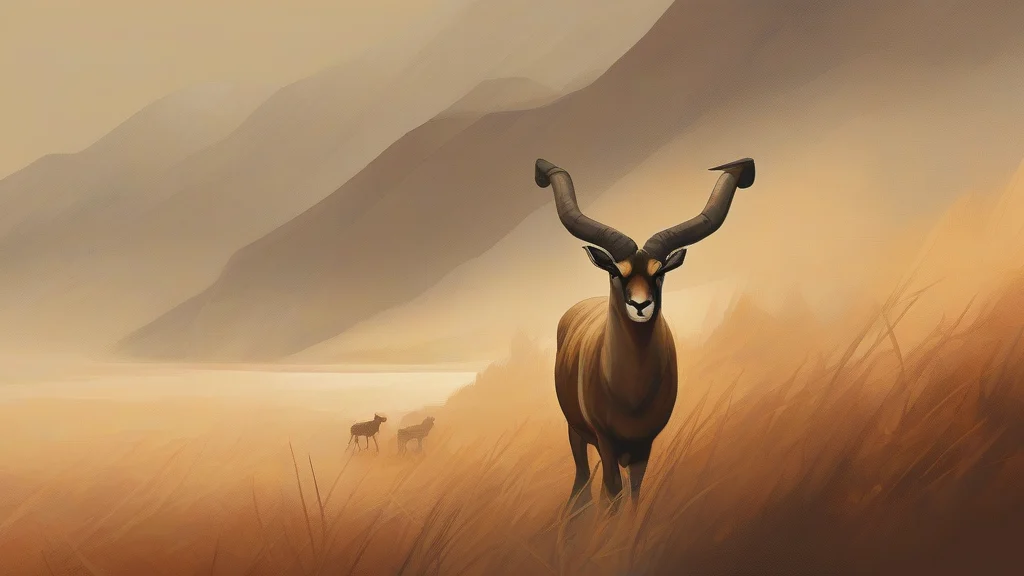
What does chiru mean?
The chiru, better known as the Tibetan antelope (Pantholops hodgsonii), is a graceful, long-legged antelope that roams the windswept steppes of the Tibetan Plateau at elevations of up to 5,500 metres. Males bear elegant, upright black horns reaching around 70 centimetres, while both sexes carry a dense coat insulating them against brutal Himalayan winters. The species became internationally notorious for its underfur, called shahtoosh, whose extraordinary softness and warmth made shawls woven from it luxury items despite costing countless animals their lives. Rampant poaching through the late twentieth century collapsed chiru populations until international trade bans and Chinese conservation programmes—culminating in its 2021 reclassification from endangered to near threatened on the IUCN Red List—began to reverse the decline. Today the word appears chiefly in wildlife, conservation, and fashion-history writing, standing as a symbol of both human greed and the possibility of ecological recovery.
nounA chiru is the Tibetan antelope (Pantholops hodgsonii), a medium-sized antelope native to the high-altitude plains of the Tibetan Plateau, prized—and hunted—for its exceptionally fine underfur known as shahtoosh.
- The Tibetan antelope (Pantholops hodgsonii), a hoofed mammal of the high Tibetan Plateau.
"Poaching for shahtoosh wool drove the chiru to the brink of extinction before conservation efforts allowed its numbers to recover."
"Each winter, thousands of chiru migrate across the Changtang grasslands in search of calving grounds."
"International bans on shahtoosh trade have given the chiru a fighting chance at survival."
The standard English plural adds -s. In zoological contexts, the unmarked form "chiru" may also function as a collective plural.
"Conservation patrols counted hundreds of chirus during the autumn migration."
Its wool is so fine that a shawl made from it can pass through a wedding ring—demand that once pushed the chiru to the edge of extinction.
Reviewed by Deb Chak, Editor. AI-assisted content curated by RJS Tech Solutions LLP.
Etymology of chiru
The word "chiru" comes directly from Tibetan, the name by which the animal has long been known to the people who share its high plateau habitat. It was adopted into English by nineteenth-century naturalists and explorers documenting Himalayan fauna, and it remains the standard common name alongside "Tibetan antelope." As a loanword from a non-Indo-European language, it has no cognates within English vocabulary.
How chiru is actually used
"Chiru" is used almost exclusively in zoological, conservation, and wildlife-trade contexts. The plural is typically "chirus," though "chiru" is sometimes used unchanged as a collective or scientific-style plural.
Easily confused with chiru
A chamois is a goat-antelope of European mountains, whereas the chiru is the Tibetan antelope of Central Asian high plateaus.