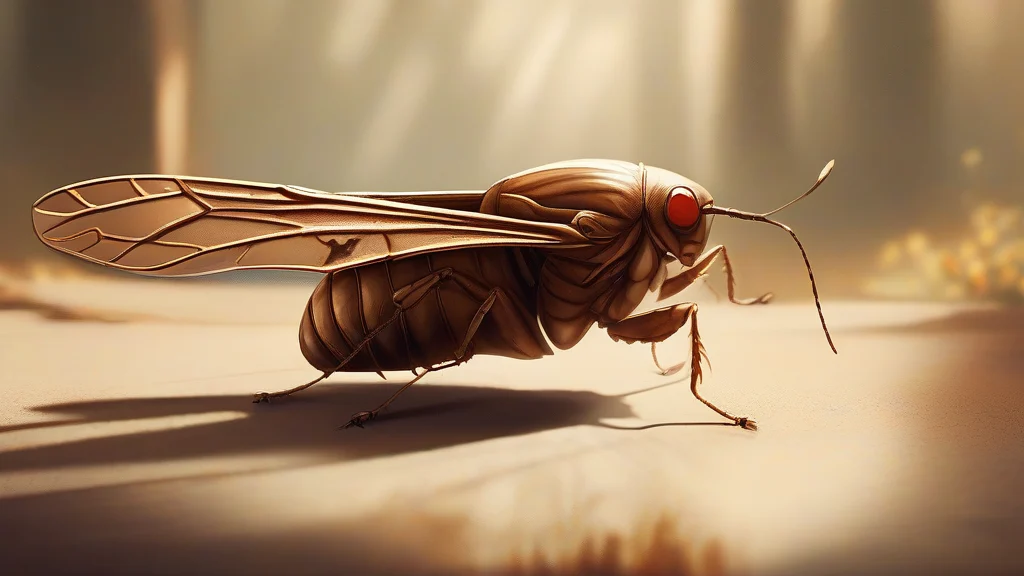
What does cicada mean?
A cicada is a large, stout-bodied insect belonging to the family Cicadidae, found mainly in warm temperate and tropical regions around the world. Cicadas are best known for the loud, high-pitched droning produced by males, which vibrate specialized drum-like membranes called tymbals on their abdomens to attract mates; in large numbers this chorus can be almost deafening. Most of a cicada's life is spent underground as a nymph feeding on root sap, with adults emerging for only a few weeks to breed. Some North American species, known as periodical cicadas, follow remarkable 13- or 17-year life cycles, emerging simultaneously in vast broods. In everyday English, 'cicada' functions as a countable noun with plural 'cicadas', and it frequently appears in writing about summer, heat, and the natural world. Although Americans sometimes colloquially call cicadas 'locusts', the two insects are unrelated — locusts are swarming grasshoppers.
nounA large insect of the family Cicadidae, the male of which produces a loud, shrill droning sound by vibrating drumlike membranes on its abdomen. Cicadas typically live in trees and shrubs, and many species spend years underground as nymphs before emerging as adults.
- A large insect of the family Cicadidae, whose male produces a loud droning or buzzing sound, found in warm regions worldwide.
"The summer air hummed with the relentless song of the cicadas."
"The trees were alive with the deafening chorus of cicadas on the hot August afternoon."
"Brood X cicadas emerged across the eastern United States after seventeen years underground."
The standard plural simply adds -s. Cicadas are sometimes mistakenly referred to as 'locusts' in American English, especially regarding periodical broods.
"When the seventeen-year cicadas finally emerged, they covered every tree trunk in the neighborhood."
Periodical cicadas in North America live underground for 17 years before emerging all at once — a synchronized appearance so reliable it can be predicted decades in advance.
Reviewed by Deb Chak, Editor. AI-assisted content curated by RJS Tech Solutions LLP.
Etymology of cicada
The word 'cicada' comes directly from Latin cicada, meaning the same insect, which itself likely derives from an earlier Mediterranean source. It was adopted into English in the late 14th century, originally appearing in forms closer to the Latin. The Latin word has given related terms in Romance languages such as Italian cicala and French cigale, reflecting its continuous use for the insect across Europe.
Related word forms
How cicada is actually used
In North America, cicadas are sometimes informally (and incorrectly) called 'locusts', a usage dating back to colonial times; careful writers distinguish the two. The plural is 'cicadas'.
Easily confused with cicada
A locust is a swarming grasshopper, but 'cicada' and 'locust' are often confused because early American settlers called cicadas 'locusts'; they are entirely different insects.