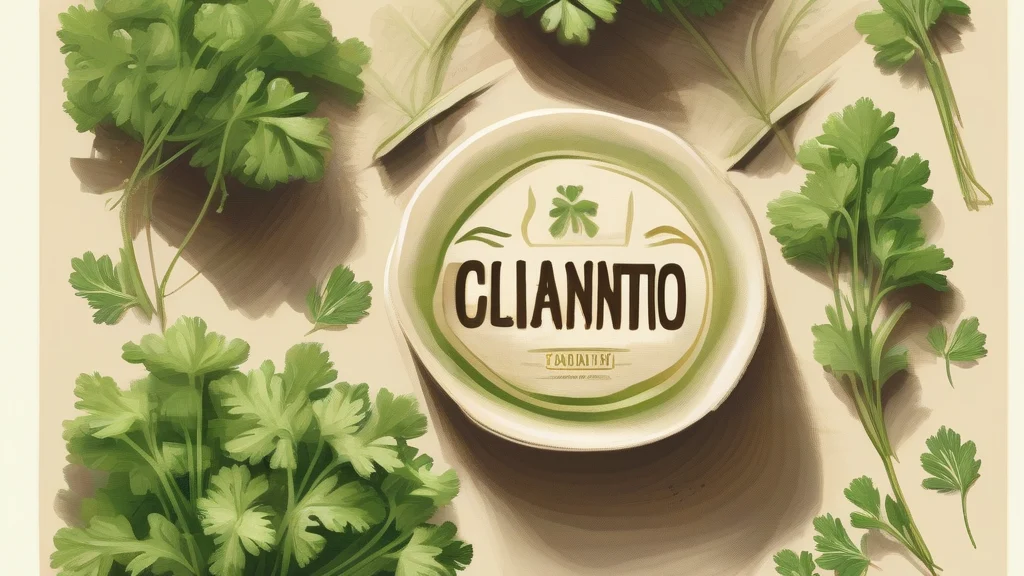
What does cilantro mean?
Cilantro refers to the fresh green leaves and tender upper stems of Coriandum sativum, an annual herb in the carrot family. In North American usage, cilantro names the leafy herb itself, while the plant's dried seeds are sold separately as the spice coriander; elsewhere in the English-speaking world, notably in Britain, the fresh leaves are usually called simply coriander or fresh coriander. The herb has a distinctive, pungent, slightly citrusy flavor that divides opinion sharply — some people carry a genetic variant that makes its aroma compounds taste unpleasantly soapy. Cilantro is indispensable to many world cuisines: it appears as the finishing garnish on Mexican salsas and tacos, blended into Indian chutneys and curries, scattered over Vietnamese noodle soups, and folded into Middle Eastern dishes. Because its delicate flavor fades quickly with heat, cooks typically add it raw or at the very end of cooking, making it one of the most recognizable finishing herbs in modern kitchens.
nounThe fresh leaves and tender stems of the coriander plant (Coriandum sativum), widely used as a culinary herb, especially in Mexican, Indian, Southeast Asian, and Middle Eastern cooking.
- The fresh leaves and stems of Coriandum sativum, used as an herb in cooking
"She scattered a handful of chopped cilantro over the tacos just before serving."
"Stir the chopped cilantro into the salsa at the last minute to keep its flavor bright."
"Many Vietnamese pho recipes call for a garnish of fresh cilantro and Thai basil."
The plural is rare since the herb is usually referred to by quantity or mass ('some cilantro,' 'two bunches of cilantro'), but 'cilantros' occasionally appears when counting individual plants or bunches.
"The market stall displayed several fresh cilantros beside the bundles of mint."
For roughly half of humanity, cilantro tastes like soap — a genetic variant in odor receptors makes some people perceive its aldehydes as soapy rather than citrusy.
Reviewed by Deb Chak, Editor. AI-assisted content curated by RJS Tech Solutions LLP.
Etymology of cilantro
Cilantro derives from Spanish, where it is the word for coriander; Spanish took the term from Late Latin coriandrum, which itself traces back through Greek koriannon (or koriandron). The English word entered use in American English, likely in the early 20th century, as Mexican cuisine's influence grew in the United States, distinguishing the fresh herb from the seed spice already known as coriander. Its closest English cognate is coriander, both descending from that same Greco-Latin root.
How cilantro is actually used
Cilantro is primarily a North American term; in most other English-speaking regions, especially Britain, the herb is simply called 'coriander' or 'fresh coriander.' The word carries no strong connotations beyond its association with vibrant, fresh-flavored cuisines.
Easily confused with cilantro
Coriander refers to the whole plant, including its dried seeds (a spice), while cilantro specifically means the fresh leaves and stems of that plant.
Culantro (Eryngium foetidum) is a different herb with long, serrated leaves and a stronger flavor, despite the confusingly similar name.