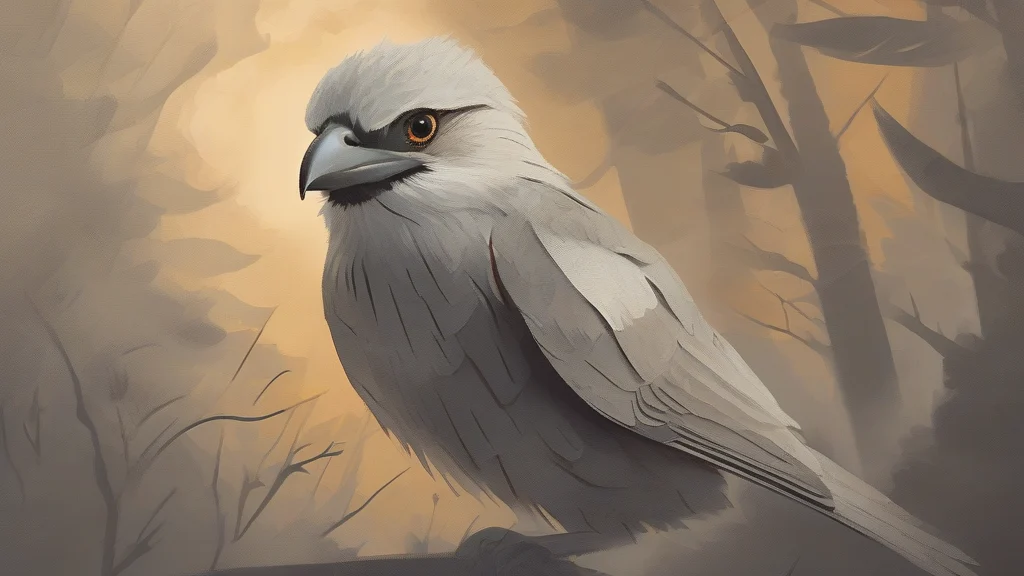
What does cinereous mean?
Cinereous is a formal adjective describing the pale, dull grey colour of wood ashes — the shade left behind after something has burned. Derived from the Latin cinis, meaning ash, it entered English in the seventeenth century and remains largely confined to technical and literary registers. Its most familiar modern habitat is ornithology and zoology, where it serves as an official colour descriptor in species names such as the cinereous vulture, cinereous tit, and cinereous harrier, though it also appears in botanical and art-historical writing. Unlike everyday greys, which range widely in tone, cinereous names one specific, ashy hue, making it useful wherever precision matters. The word carries no strong emotional charge; it is descriptive rather than evocative, yet its smoky etymology gives it a quiet poetry. Writers reach for it when they want exactness with a touch of the scholarly — a reminder that even the humblest colours can have their own learned vocabulary.
Ash-grey in colour; of the pale grey hue characteristic of wood ashes.
"A cinereous mist hung over the burnt fields at dawn."
Chiefly used in formal, scientific, or literary contexts rather than casual speech.
Resembling ashes in appearance or texture.
"The cinereous residue coated every surface of the abandoned foundry."
Less common sense, mostly found in technical description.
Named after ashes themselves — from Latin cinis, 'ash' — cinereous is so precisely grey that ornithologists use it as an official colour term, giving us birds like the aptly named cinereous vulture, Europe's largest bird of prey.
Reviewed by Deb Chak, Editor. AI-assisted content curated by RJS Tech Solutions LLP.
Etymology of cinereous
Cinereous comes from the Latin cinereus, meaning 'of ashes' or 'ash-coloured', itself formed from cinis, the Latin word for ashes. The adjective was adopted into English during the seventeenth century, part of the era's broader influx of Latinate colour terms into scientific and descriptive prose. It shares this root with related English words such as cinerary (relating to ashes, especially of the cremated dead) and incinerate (to burn to ashes), all tracing back to the same Latin noun.
Related word forms
How cinereous is actually used
Cinereous is a formal, technical word, encountered mainly in ornithology, entomology, botany, and art-historical description rather than everyday speech. It carries a neutral to slightly literary connotation; it names a precise shade of grey rather than evoking mood directly. In species names it is conventionally capitalized only when part of a Latin binomial (e.g. Aegypius monachus, the cinereous vulture).
Easily confused with cinereous
Cerulean describes a deep sky-blue colour, whereas cinereous denotes a dull ash-grey.
A cinerarium is a receptacle for the ashes of the dead; cinereous is simply an adjective meaning ash-grey.