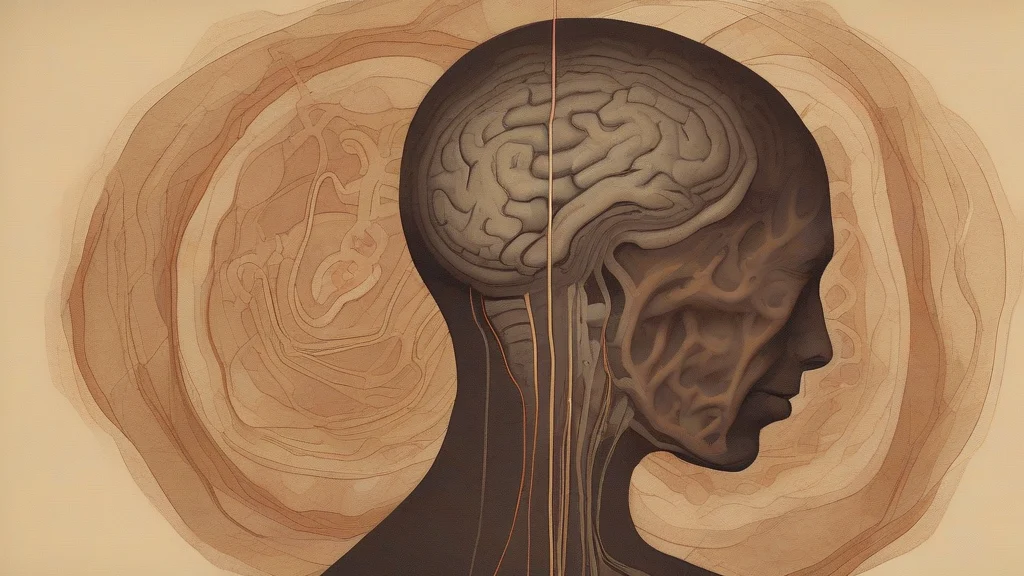
What does cingulate mean?
"Cingulate" is a chiefly scientific adjective meaning shaped like, or belonging to, a girdle or encircling band. Its dominant modern use lies in anatomy and neuroscience, where it names the cingulate gyrus — a curved strip of cerebral cortex arched like a belt above the corpus callosum — along with its subdivisions, the anterior and posterior cingulate cortices, which are heavily studied for their roles in attention, error detection, emotion, and pain. The term derives from the Latin "cingulum", a belt or sword-strap, making it part of a small family of English words that trace back to the idea of binding or encircling, alongside "cincture" and "succinct". Outside medicine and biology, "cingulate" appears rarely, and general readers will encounter it almost exclusively in discussions of brain imaging or neuroanatomy. Precise and narrowly technical, it carries no figurative or colloquial life, but for anyone reading about the brain it is an indispensable piece of vocabulary.
adjectiveShaped like or belonging to a girdle or belt; in anatomy, specifically describing structures of the cerebral cortex that form an arched band over the corpus callosum, such as the cingulate gyrus.
- Anatomy & neuroscience: relating to or denoting a band-shaped structure of the cerebral cortex arching over the corpus callosum, especially the cingulate gyrus or its divisions.
- General/botanical & zoological: girdle-shaped or encircling, bound as if by a belt.
"The anterior cingulate cortex plays a key role in processing pain and emotion."
"Activity in the anterior cingulate cortex increases when we detect errors or experience conflict."
"In some plant species the seeds bear a distinctive cingulate ridge around their margin."
The word for your brain's emotion belt comes straight from Latin for a soldier's sword-belt — and it's the reason neuroscientists talk about a 'girdle' wrapped around your corpus callosum.
Reviewed by Deb Chak, Editor. AI-assisted content curated by RJS Tech Solutions LLP.
Etymology of cingulate
"Cingulate" derives from the Latin "cingulum", meaning a belt, sash, or sword-strap, itself formed on the verb "cingere", to surround or encircle. The adjective entered scientific English in the nineteenth century, when anatomists applied it to the girdle-like convolution of the cerebral cortex now known as the cingulate gyrus. The same Latin root produced several other English borrowings, including "cincture" (a belt or encircling band) and, through different routes, "succinct" (literally 'girt tight') and "precinct". The related noun "cingulum" survives in anatomy for various band-shaped structures.
Related word forms
How cingulate is actually used
A technical term used almost exclusively in anatomy, neuroscience, and descriptive biology; rare outside scientific writing. In neuroscience literature it frequently functions quasi-nominally, as in 'the anterior cingulate', referring to the cingulate region of the cortex. Pronunciation places stress on the first syllable, with the soft 'g' of 'ginger'.
Easily confused with cingulate
"Ungulate" refers to hoofed mammals like horses and cattle, while "cingulate" describes belt- or band-shaped anatomical structures — they rhyme but share nothing else.