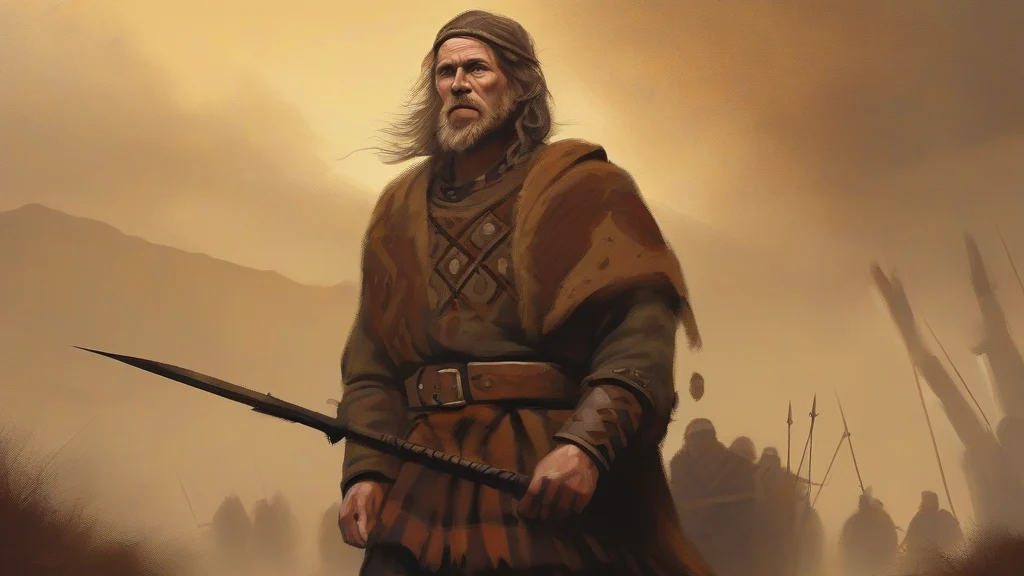
What does clansman mean?
A clansman is a member of a clan — most familiarly, a man belonging to one of the traditional Highland Scottish clans, such as Clan Campbell or Clan MacLeod. In its broader sense, the term describes anyone belonging to a clan, tribe, or tightly bound kinship group anywhere in the world. The word carries strong connotations of lineage, loyalty, and collective identity: a clansman owes allegiance to his chief and kinsmen, often expressed through shared symbols like tartan, crest, and name. Because clan structures shaped much of Highland history, the word appears frequently in historical writing, literature, and discussions of genealogy and heritage. It should not be confused with 'Klansman,' which refers to a member of the Ku Klux Klan and carries wholly different connotations. The plural is 'clansmen.'
nounA member of a clan, especially a Highland Scottish clan; more broadly, a person belonging to a close-knit kinship or tribal group.
- A male member of a Highland Scottish clan.
- More broadly, any member of a clan, tribe, or closely related kin group.
"Every clansman in the glen answered the chief's summons and gathered at the castle."
"The old clansman still wore the tartan of his ancestors at every gathering."
"In many traditional societies, a clansman's first loyalty was to his kin above any central authority."
'Clansmen' is the regular masculine/mixed-gender plural; 'clanswomen' refers specifically to women.
"Hundreds of clansmen assembled on the moor for the annual gathering."
The word 'clan' itself comes from the Gaelic 'clann,' meaning children or offspring — so every clansman is, etymologically speaking, one of the 'children' of his people.
Reviewed by Deb Chak, Editor. AI-assisted content curated by RJS Tech Solutions LLP.
Etymology of clansman
Clansman combines 'clan,' borrowed from Gaelic clann meaning 'children, offspring, family,' with the native English agent suffix '-man.' The Gaelic word itself ultimately traces to Latin planta ('sprout, slip, offspring'), reflecting how kinship groups were imagined as branches of a common stock. The compound arose in English usage during the early modern period as British writers described Highland society, and it remains tied to Scottish heritage while extending to clan-based peoples elsewhere.
Related word forms
How clansman is actually used
Most strongly associated with the Scottish Highlands and with historical or literary contexts; in modern use it can also describe members of other tribal societies. Note that 'clansman' must be clearly distinguished from 'Klansman' (member of the Ku Klux Klan), which has an entirely different and highly charged meaning.
Easily confused with clansman
A clanswoman is the female counterpart of a clansman — both denote members of a clan, differing only in gender.
A klansman (capital K) is a member of the Ku Klux Klan, an American white supremacist organization, whereas a clansman belongs to a traditional Scottish or Irish clan.