
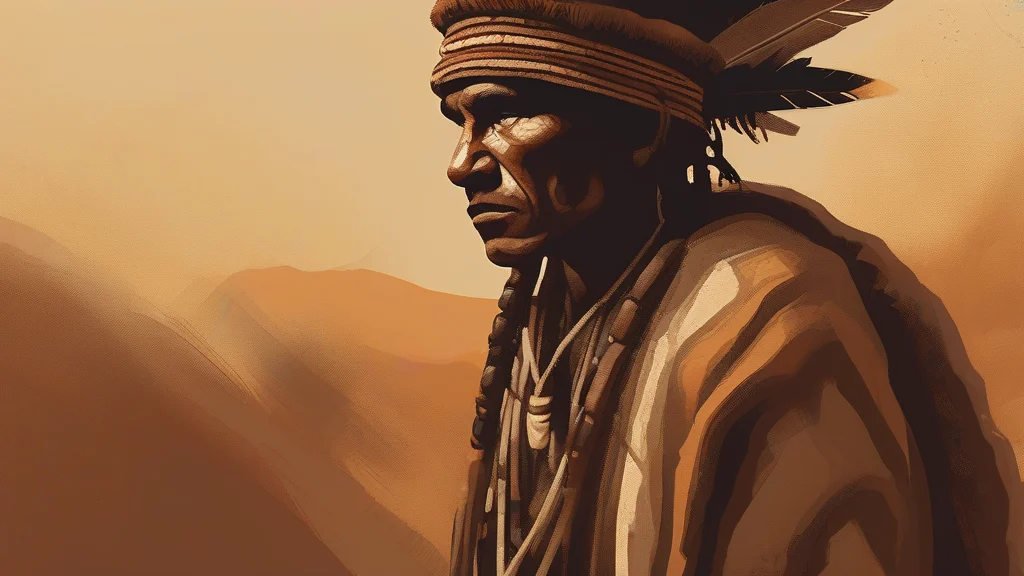
What does tribesman mean?
“Tribesman” is a noun meaning a male member of a tribe, understood as an ethnic, social, or cultural group with a shared identity and organization. In ordinary modern use, it may simply identify someone as belonging to a particular tribal community; the older sense of someone regarded as outside settled or mainstream society is now chiefly historical or context-specific. Because the word explicitly marks a man, “tribesperson” or “member of the tribe” is usually preferable when gender is irrelevant. The term can sound dated or reductive when applied casually to Indigenous peoples, especially where colonial or outsider perspectives shaped older descriptions. A more informative sentence normally supplies the community, region, or role involved rather than treating “tribesman” as a generic label. Historically, the word arose from “tribe” plus “man,” following the English borrowing of “tribe” from Old French and ultimately Latin. The resulting noun is compact and forceful, and it remains useful when the traditional, gendered designation is specifically intended.
nounA male member of a tribe, especially an ethnic, social, or cultural group organized around a shared identity. Historically, the word could also refer to a member of a group regarded as outside settled or mainstream society.
- A male member of an ethnic, social, or cultural group organized as a tribe.
- Historically, a member of a group regarded as outside or hostile to settled mainstream society.
"The tribesman returned to his village after several years working abroad."
"Each tribesman carried a share of the food and equipment."
"The novel portrays the conflict from the perspective of a tribesman caught between two cultures."
The regular plural changes “-man” to “-men.”
"Several tribesmen gathered near the river."
The word makes its gendered history explicit: when gender is irrelevant, “tribesperson” is usually the neutral alternative.
Reviewed by Deb Chak, Editor. AI-assisted content curated by RJS Tech Solutions LLP.
Where does tribesman come from?
The base word “tribe” was borrowed into English from Old French tribu, ultimately from Latin tribus, a term originally referring to one of the three divisions of Roman citizens. English formed “tribesman” by adding “-man” to “tribe,” following the ordinary English practice of using “-man” to denote a person of a specified social kind. The compound arose during the early modern period and later acquired the extended historical sense of a member of a group considered outside settled society.
Related word forms
How tribesman is actually used
The term is a standard but explicitly gendered noun; use “tribesperson” or “member of the tribe” when gender is irrelevant. In casual or historical descriptions, it can sound dated or reductive, particularly when it reflects outsider or colonial attitudes toward Indigenous peoples.
Easily confused with tribesman
A tribesman belongs to an ethnic, social, or cultural tribe, whereas a tradesman earns a livelihood by trade or a manual occupation.