
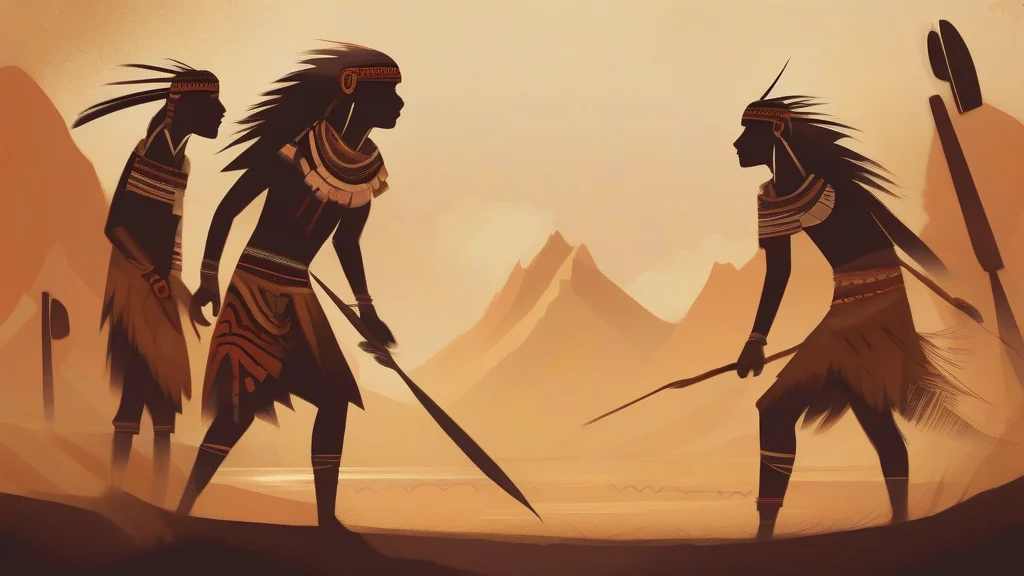
What does tribal mean?
Tribal is most commonly used as an adjective meaning relating to a tribe or the social groups known as tribes. It can describe communities, councils, leaders, customs, identities, and conflicts, especially where kinship, ancestry, language, or customary laws shape collective life. The word is neutral and precise when it names an actual social organization, but it may also carry the implication that a group is primitive, isolated, or backward. That secondary connotation helps explain why careful writers distinguish between describing tribal institutions and stereotyping them as “tribal.” As a noun, tribal is chiefly historical or specialized and means a member of a tribe; modern prose usually uses members of a tribe or tribal people instead. The adjective comes through French from Latin tribalis, ultimately from tribus, a root also behind tribe and tribute. Thus, while tribal may suggest tradition, conflict, or collective identity, it remains a useful term for discussing how communities organize themselves.
Of or relating to a tribe, especially to a community defined by shared ancestry, culture, language, customs, or social organization.
"The archive preserves correspondence about land rights from the tribal council."
The adjective is common in British and American English but should be used carefully when it could imply that a people are primitive or backward.
A member of a tribe, now chiefly used in historical, legal, or anthropological contexts.
"The nineteenth-century report gives an unusually detailed account of a tribal settlement."
This noun is uncommon in contemporary prose; members of a tribe or tribal people is usually more natural and less potentially objectifying.
The plural is uncommon and generally characteristic of historical or specialized writing.
"The archive contains testimony from tribals as well as correspondence from colonial officials."
Tribal comes from the same Latin root as tribe and tribute: a linguistic reminder that communities have long been bound by ancestry, custom, and exchange.
Reviewed by Deb Chak, Editor. AI-assisted content curated by RJS Tech Solutions LLP.
Where does tribal come from?
English tribal was borrowed through French tribal from Latin tribalis, meaning “of or relating to a tribe.” The Latin adjective was formed from tribus, meaning “tribe,” a root also associated with words such as tribute and tributary. The adjective entered English with the development of European languages and the increasing use of the term for distinct social and political communities.
Related word forms
How tribal is actually used
As an adjective, tribal is standard in both British and American English. It can imply that a community is primitive, isolated, or backward when used of contemporary peoples, so it should be applied with attention to historical and cultural context. The noun is uncommon in modern prose, where members of a tribe or tribal people is usually more natural.
Easily confused with tribal
Tribal is an adjective relating to a tribe or tribal community, whereas tribalism is the noun for tribal social organization, allegiance, or practices.