What does clapboarded mean?
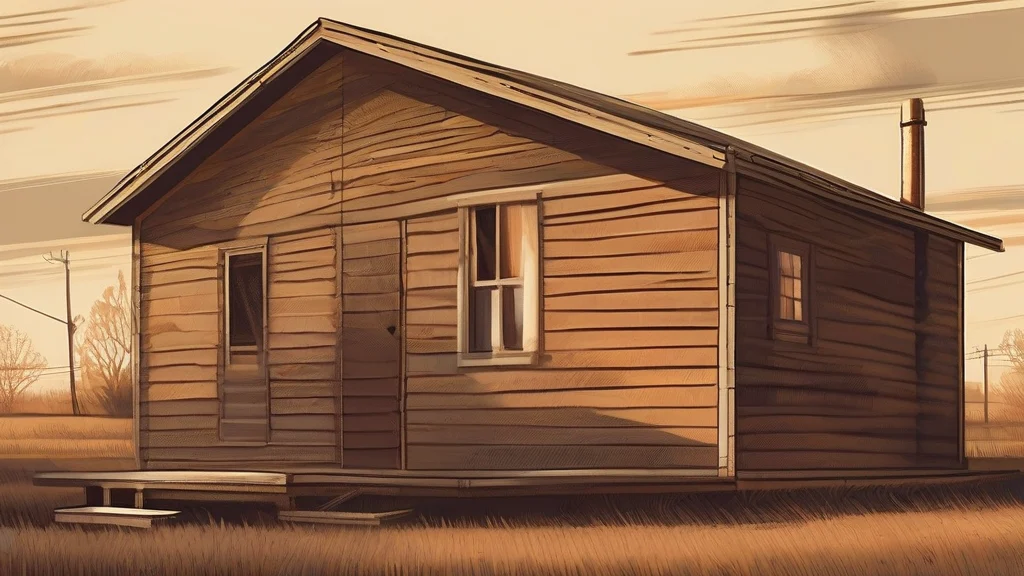
Clapboarded describes a building or wall covered with clapboards: long, thin boards of wood fixed horizontally with their edges overlapping so that rain runs off rather than seeping through. The technique, brought to North America by early European settlers, became the defining look of colonial and rural New England architecture, where weathered pine clapboards famously age to a soft silver-gray. The term functions as an adjective derived from the verb 'to clapboard' (to cover with such boards), which itself traces back to the Dutch 'klaphout,' meaning split wood. Clapboarded carries strong connotations of Americana — white clapboarded churches, saltbox farmhouses, and coastal villages appear constantly in literature, film, and real-estate descriptions evoking traditional charm. The word is chiefly American; British speakers more often say 'weatherboarded' for the same kind of siding.
adjectiveCovered or sided with clapboards — long, thin boards laid horizontally with edges overlapping, used especially on the exterior walls of houses.
- (of a building or wall) covered with clapboards — long, narrow boards fixed horizontally so that their edges overlap to shed water
"The old farmhouse was clapboarded in weathered gray pine that gleamed silver in the evening light."
"The village church, clapboarded in white, stood out against the autumn foliage."
"They restored the clapboarded cottage to its original nineteenth-century appearance."
That silvery-gray New England farmhouse look? It's clapboard doing its thing — and the word comes from the Dutch 'klapbos,' literally 'split board.'
Reviewed by Deb Chak, Editor. AI-assisted content curated by RJS Tech Solutions LLP.
Etymology of clapboarded
Clapboarded derives from clapboard, a term first recorded in English in the early seventeenth century, borrowed from the Dutch 'klaphout,' combining 'klappen' (to split) and 'hout' (wood), reflecting how the boards were originally riven rather than sawn. The participial adjective formed naturally as settlers described buildings clad in this material. Its closest relatives are the Dutch source terms themselves and the English words 'clap' and 'clapper,' all stemming from the same Germanic root for splitting or striking.
Related word forms
How clapboarded is actually used
Chiefly American English; British usage prefers 'weatherboarded' for the same style of siding. The word appears almost exclusively as a participial adjective describing buildings, particularly traditional New England architecture.
Easily confused with clapboarded
Weatherboarding refers broadly to horizontal overlapping exterior siding (the common British term), while clapboard specifically denotes the split or sawn wooden boards typical of American construction.