What does clarinet mean?
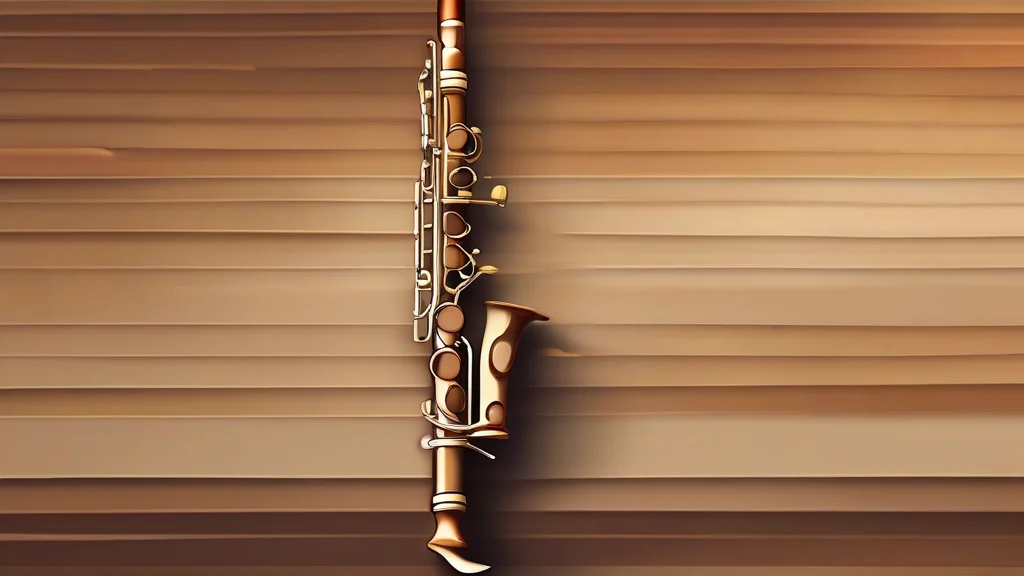
The clarinet is a single-reed woodwind instrument with a straight, cylindrical body, usually made of African blackwood or plastic, and a flared bell at one end. Played by blowing air past a thin reed attached to the mouthpiece, it produces a warm, flexible tone that spans more than three octaves and ranges from mellow in its lower register to bright and piercing at the top. Invented in Germany around the beginning of the eighteenth century, it quickly became a staple of orchestras, concert bands, jazz ensembles, and military music. The word comes from the Italian 'clarino', meaning a high trumpet, reflecting early attempts to mimic that instrument's brilliance in wood. Notable works written for it include Mozart's Clarinet Concerto, and celebrated players range from classical virtuosos to jazz greats such as Benny Goodman. Its versatility, expressive range, and agility have made the clarinet one of the most widely played instruments in the world today.
nounA single-reed woodwind instrument of cylindrical bore, held vertically and played by blowing through a mouthpiece with a reed, having a wide range and a warm, agile tone.
- The single-reed woodwind instrument itself.
- An organ stop imitating the tone of a clarinet.
"She played a haunting solo on the clarinet during the second movement."
"He has played the clarinet in the school orchestra for five years."
"Mozart wrote his famous Clarinet Concerto for his friend Anton Stadler."
Regular plural; also used to refer collectively to the different sizes within the clarinet family, e.g. B-flat, bass, and E-flat clarinets.
"The orchestra's section includes three clarinets and a bass clarinet."
The clarinet's name literally means 'little trumpet' — it was invented around 1700 as a way to make a trumpet-like sound out of wood and a single reed.
Reviewed by Deb Chak, Editor. AI-assisted content curated by RJS Tech Solutions LLP.
Etymology of clarinet
The clarinet derives its name from the Italian 'clarino', the term for the high register of the Baroque trumpet, itself rooted in the Latin 'clarus' meaning clear or bright. The instrument was developed in Germany around the turn of the eighteenth century by instrument maker Johann Christoph Denner, who adapted the earlier chalumeau by adding a register key. English adopted the word via French 'clarinette' in the early eighteenth century. Cognates sharing the Latin root include 'clarion', 'clarity', 'clear', and 'declare'.
How clarinet is actually used
Standard register across contexts; 'play the clarinet' takes the definite article by convention, as with most instruments. The bass and E-flat clarinets are distinct members of the same family rather than separate senses of the word.
Easily confused with clarinet
A clarion is a medieval trumpet-like instrument or its clear, ringing sound, whereas the clarinet is a reed-blown woodwind.
A cornet is a brass instrument resembling a small trumpet, while the clarinet is a woodwind played with a single reed.