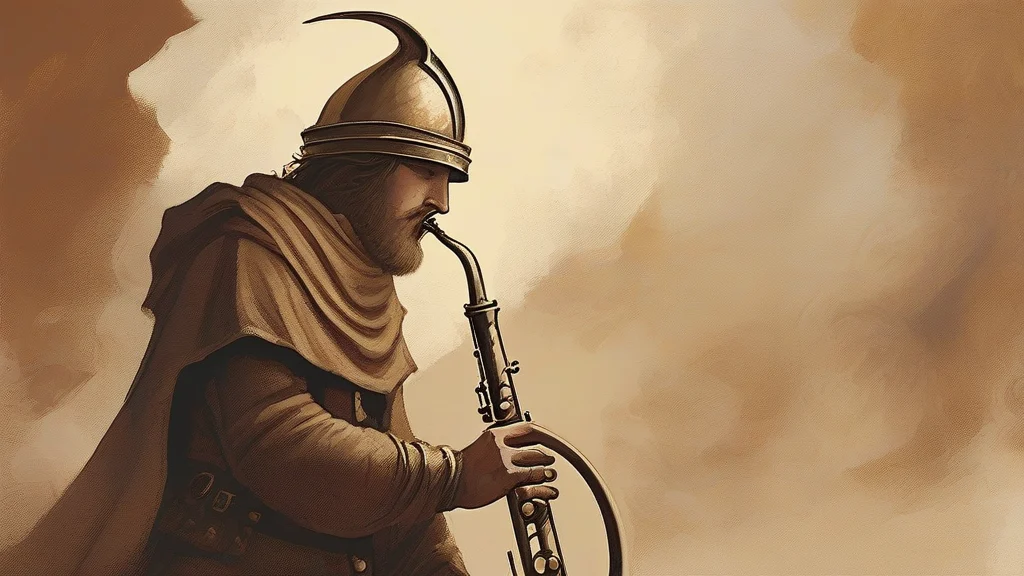
What does clarion mean?
A clarion is a slender, high-pitched trumpet of the Middle Ages, prized above other trumpets for its clear, penetrating tone, which carried well over the noise of battle and was used to issue commands and rally troops. The word has outlived the instrument itself: today, 'clarion' appears most often in figurative use, where it denotes any clear, powerful, and inspiring sound or appeal — most commonly in the phrase 'a clarion call,' describing words or voices that stir people to action. The term carries a formal, literary register and an uplifting, urgent connotation, evoking heralds, crusades, and moments of decisive moral purpose. Writers reach for it when they want to suggest not just loudness but clarity combined with emotional force. Though the instrument has vanished from modern ensembles, the word remains a vivid shorthand for a message too compelling to ignore.
nounA clarion is a type of medieval trumpet with a narrow tube and a clear, shrill tone, used especially in battle or for signals. By extension, it refers to the clear, powerful, and stirring sound of such a trumpet.
- A narrow-bore medieval trumpet with a clear, shrill sound, used chiefly for military signals.
- Figuratively: a clear, powerful, and rousing sound, voice, or appeal that stirs people to action (most often in 'clarion call').
"The general's clarion call rallied the weary troops one final time before dawn."
"The clarion sounded across the valley, signalling the start of the tournament."
"Her speech became a clarion call for environmental reform around the world."
Standard plural; used mainly when referring to multiple instruments or multiple figurative calls.
"Dozens of clarions echoed across the battlefield at the signal to advance."
Before radios existed, entire battles could hinge on who heard the clarion first — its piercing tone was engineered to cut through the chaos of clashing armies.
Reviewed by Deb Chak, Editor. AI-assisted content curated by RJS Tech Solutions LLP.
Etymology of clarion
Clarion entered English from Old French in the late medieval period, deriving ultimately from Latin 'clarus,' meaning clear or bright, via Vulgar Latin forms related to the noun 'clario.' The name reflects the instrument's defining quality — a tone notably clearer and more piercing than that of ordinary medieval trumpets. Its Romance relatives include French 'clairon' (a bugle) and Italian 'chiarina,' all sharing the same root sense of clarity.
How clarion is actually used
Clarion is largely literary and formal today. Outside of historical writing about medieval instruments, it survives almost exclusively in the fixed phrase 'clarion call,' which carries an elevated, inspirational connotation. Using 'clarion' as a standalone adjective meaning 'clear and ringing' is attested but rare in modern prose.
Easily confused with clarion
A clarion is a medieval trumpet-like instrument producing a clear, piercing sound, while a clarinet is a modern woodwind instrument with a single reed.