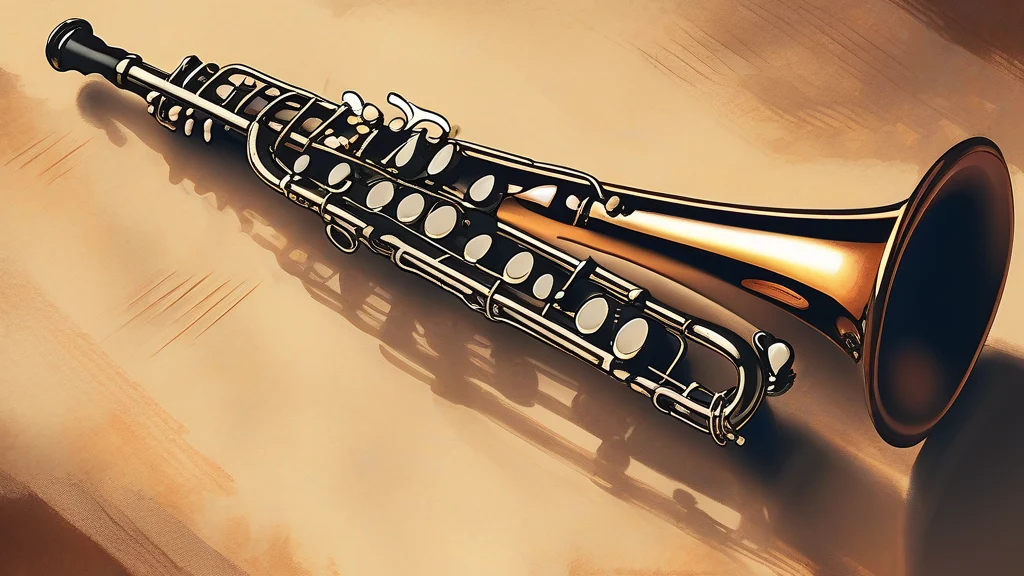
What does clarionet mean?
A clarionet is simply an earlier English name for the clarinet, the familiar single-reed woodwind instrument with a straight cylindrical tube, finger holes, keys, and a flared bell. The term entered English in the eighteenth century, when the newly developed instrument was spreading through European orchestras and military bands, and it remained common well into the nineteenth century before 'clarinet' became the standard form. Today the word survives mainly in historical contexts: old scores, makers' catalogues, museum labels, and period fiction may all refer to a clarionet rather than a clarinet, and performers specializing in historically informed performance sometimes use the term deliberately. A player of the instrument may be called a clarionetist. Because it names the very same instrument, encountering the word calls for no change in understanding — only an awareness that the text predates, or deliberately imitates, the era when this spelling was current.
nounAn older or alternative name for a clarinet, the single-reed woodwind instrument with a cylindrical bore and flared bell.
- An early or alternative English name for the clarinet, now chiefly found in historical or musical contexts.
"The orchestra's score, dated 1795, called for two clarionets in the second movement."
"She inherited her grandfather's clarionet, its case stamped with a London maker's mark from 1880."
"In period performances, some players still refer to the part simply as 'second clarionet'."
Regular plural; used when referring to multiple instruments, as in orchestral scoring.
"The score requires two clarionets and a bassoon."
'Clarionet' was once the ordinary English word for the clarinet — Mozart never wrote for a clarinet in his lifetime; he wrote for what English speakers then often called a clarionet.
Reviewed by Deb Chak, Editor. AI-assisted content curated by RJS Tech Solutions LLP.
Etymology of clarionet
Clarionet comes from the French 'clarinette', itself a diminutive of 'clarion', the medieval trumpet whose name ultimately derives from the Latin adjective 'clarus', meaning clear or bright — a nod to the instrument's penetrating tone. The word entered English in the eighteenth century alongside the instrument itself, which had been developed around the beginning of that century by German woodwind makers, notably Johann Christoph Denner. The shortened form 'clarinet' gradually displaced it during the nineteenth century.
Related word forms
How clarionet is actually used
Now largely archaic or historical; encountered mostly in old sheet music, instrument catalogues, and period writing. The spelling carries a slightly antique flavor but denotes exactly the same instrument as the clarinet.
Easily confused with clarionet
The clarinet is the standard modern name for the same instrument; 'clarionet' is an earlier variant that survives mainly in historical scores and older texts.