What does clavi mean?
Clavi is a rare plural form borrowed directly from Latin, used in two distinct technical senses. Most commonly it designates the keys of a keyboard instrument such as an organ or harpsichord, deriving from the Latin clavis, meaning 'key' — the same root that gives us clavichord, clef, and clavicle. In anatomy and medicine, clavi serves as the plural of clavus, a Latin word for 'nail', describing nail-shaped marks, structures, or lesions such as corns on the foot. Because it is a learned borrowing rather than an everyday word, clavi appears almost exclusively in scholarly writing about music history, organology, and medical texts, and it remains unfamiliar outside those specialist fields. Its dual heritage — one sense rooted in 'key', the other in 'nail' — makes it a small but instructive example of how Latin vocabulary entered English technical language through different channels.
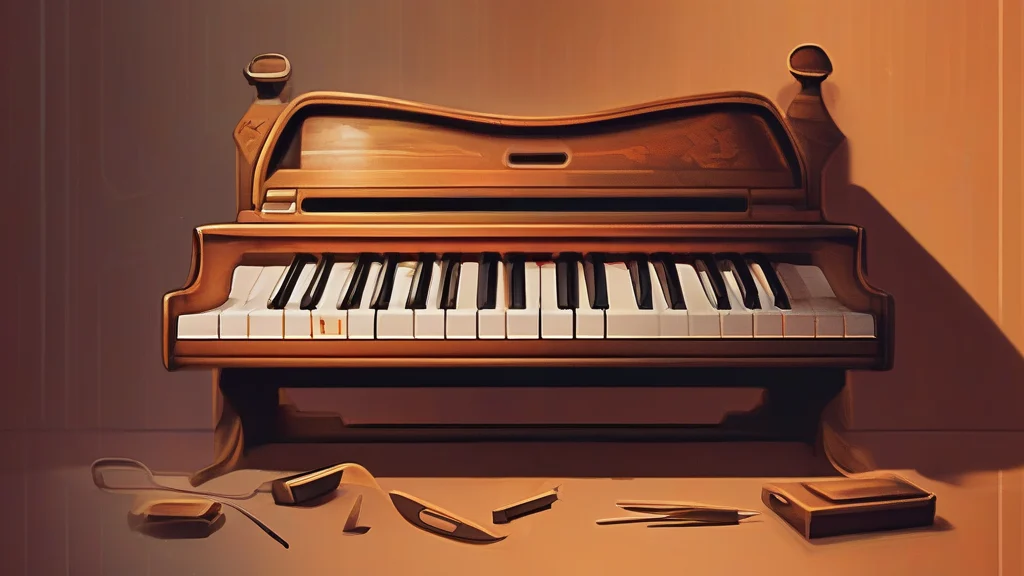
The keys of a keyboard or other stringed keyboard instrument.
"The clavi of the fortepiano were made of bone and ebony."
Used chiefly in historical and organological writing.
Plural of clavus: nail-shaped marks, structures, or lesions, especially in anatomy or medicine.
"The examination revealed painful clavi beneath the toes."
Clavi functions as the plural of clavus in the anatomical sense; the musical sense derives from clavis and is inherently plural in usage.
"Several clavi had formed along the ball of the foot."
Reviewed by Deb Chak, Editor. AI-assisted content curated by RJS Tech Solutions LLP.
Etymology of clavi
Clavi comes directly from Latin, where clavi is the plural of both clavus ('nail') and clavis ('key'). The musical sense entered English via writings on keyboard instruments, sharing a root with clavichord and the French clef, while the medical sense preserves the literal 'nail' meaning of clavus. Both senses reflect the standard practice of retaining Latin plurals in technical English vocabulary.
Related word forms
How clavi is actually used
Clavi is a rare, technical word encountered mainly in historical writings about keyboard instruments and in specialist anatomical or dermatological texts. It is always plural in form, being the plural of the Latin clavus ('nail') when referring to physical marks, though its musical sense derives instead from clavis ('key'). It belongs to formal register and would be unfamiliar to most general readers.
Easily confused with clavi
Clave refers either to the rhythmic pattern central to Afro-Cuban music or the wooden percussion sticks played to produce it, whereas clavi is the plural of clavus or a term for keyboard keys.