What does clavichord mean?
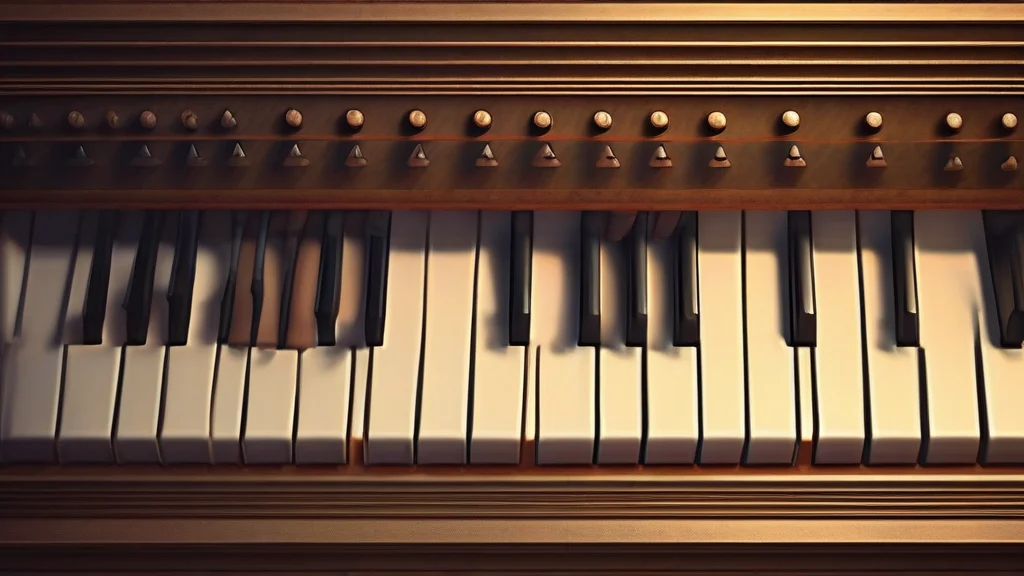
The clavichord is a small, rectangular keyboard instrument that flourished in Europe from roughly the fifteenth to the late eighteenth century. Unlike the harpsichord, which plucks its strings, or the piano, which strikes them with hammers, the clavichord sounds its strings by means of small metal wedges called tangents that rise to strike them when a key is pressed. The result is a tone of remarkable softness and intimacy — too quiet for concert halls, but ideal for private practice, composition, and home performance. Uniquely among early keyboards, skilled players could exert continued pressure on a key to produce a gentle vibrato known as Bebung. The instrument is closely associated with composers such as C. P. E. Bach, who prized its expressive nuance. Today the clavichord survives mainly in historical-performance circles, museums, and recordings, where it is valued as one of the most personal and delicate of all keyboard instruments.
nounA small, quiet keyboard instrument popular from the Renaissance through the Classical era, in which metal blades (tangents) strike the strings to produce a soft, delicate tone.
- The keyboard instrument itself: a rectangular, stringed instrument sounded by brass tangents striking the strings from below.
"She practised her Bach on the clavichord because its gentle sound wouldn't disturb the neighbours."
"The museum's collection includes an eighteenth-century clavichord still in playing condition."
"Bach reportedly preferred the clavichord for private practice and composition because of its expressive subtlety."
Standard regular plural; used when referring to multiple instruments, e.g. in collections or historical surveys.
"The exhibition displayed several clavichords spanning two centuries of craftsmanship."
The clavichord was so quiet you could barely hear it across a room — yet it let players bend notes with vibrato, a trick no other early keyboard could manage.
Reviewed by Deb Chak, Editor. AI-assisted content curated by RJS Tech Solutions LLP.
Etymology of clavichord
The word 'clavichord' derives from Medieval Latin 'clavichordium', formed from Latin 'clavis' meaning 'key' and Greek-derived 'chorda' meaning 'string'. It entered English in the late Middle Ages, reflecting the instrument's spread across Europe during the medieval and Renaissance periods. The same root 'clavis' gives English words such as 'clavicle' (collarbone) and 'clavier', while 'chorda' underlies 'chord' and 'harpsichord'.
How clavichord is actually used
The word belongs chiefly to musical, historical, and academic registers; it appears rarely in everyday conversation. It carries connotations of intimacy, antiquity, and refinement, being strongly associated with domestic music-making in the Baroque era.
Easily confused with clavichord
A harpsichord plucks its strings with quills and is much louder, while a clavichord strikes them with metal tangents and produces a far softer sound.
The piano strikes strings with hammers via a lever action and can play loudly, whereas the clavichord's tangent mechanism yields only a quiet, intimate tone.