
What does clavier mean?
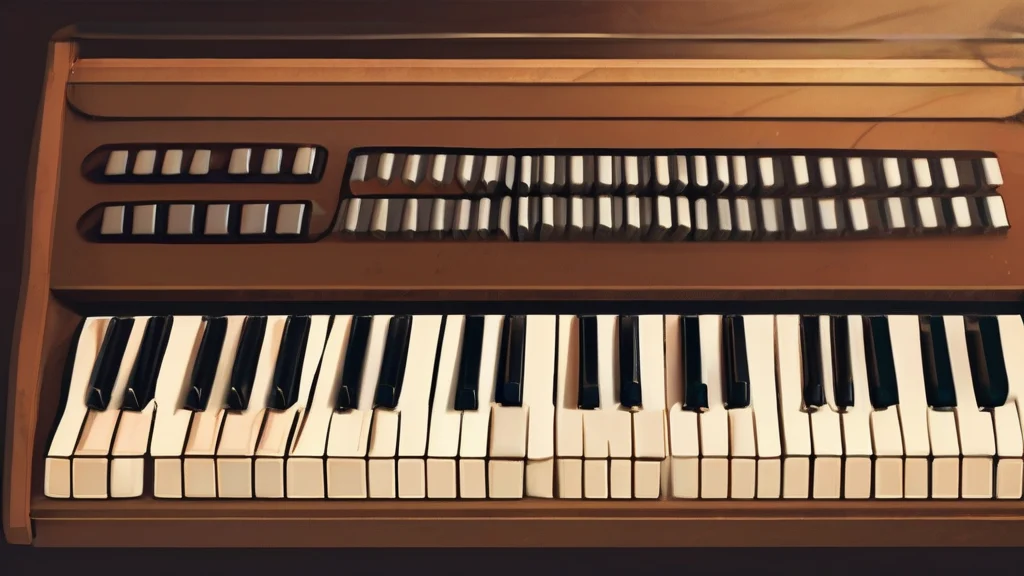
A clavier is a keyboard musical instrument, and the word is most often used as a general term for the older stringed keyboards that preceded the piano, such as the harpsichord and clavichord. In broader usage it can also denote the keyboard of any instrument, including the manuals of an organ. English borrowed the word from French, where it remains the everyday term for a keyboard of any kind; in English it carries a distinctly classical, scholarly air, appearing mainly in early-music programmes, musicology, and discussions of historical performance practice. Its cultural resonance owes much to Johann Sebastian Bach's 'The Well-Tempered Clavier', a landmark collection of preludes and fugues that kept the term alive long after the instruments themselves had faded from common use. For readers, clavier signals both the physical keys one plays and a rich tradition of keyboard music stretching back centuries before the modern piano existed.
nounA keyboard musical instrument, especially one of the older stringed keyboards such as the harpsichord or clavichord; more broadly, any keyboard of an instrument.
- A keyboard instrument, especially a stringed one such as the harpsichord or clavichord
- The keyboard itself of any musical instrument
"The recital opened with a delicate piece performed on a clavier rather than a modern piano."
"She practised the Well-Tempered Clavier on her harpsichord each morning."
"Early organ manuals were sometimes referred to as the clavier of the instrument."
Standard plural; used when referring to multiple instruments or keyboards.
"The museum's collection includes several historic claviers from the eighteenth century."
Bach's 'Well-Tempered Clavier' — one of the most famous works in Western music — is named for a keyboard, not a piano; the word simply means 'key' board, from the Latin clavis.
Reviewed by Deb Chak, Editor. AI-assisted content curated by RJS Tech Solutions LLP.
Etymology of clavier
Clavier entered English from French in the 17th century, borrowed from the French clavier meaning a key-board or keyboard. The French word derives from the Latin clavis, meaning 'key', which is also the source of related terms such as clavicle ('little key', i.e. the collarbone), enclave (land 'locked in by keys'), and the prefixed forms clavichord and clavicembalo naming specific keyboard instruments. The root clavis thus ties together both anatomy and music through the shared image of something that turns or unlocks.
How clavier is actually used
In modern English usage, clavier is chiefly encountered in classical and early-music contexts, often as a generic label for pre-piano keyboard instruments; Bach's 'Well-Tempered Clavier' keeps it familiar to concertgoers. In French it is the ordinary word for any keyboard, including a computer keyboard, but that sense rarely appears in English.
Easily confused with clavier
A clavichord is a specific quiet stringed keyboard instrument struck with tangents, whereas clavier is the general term for any keyboard instrument or its keyboard.
A cavalier is a horseman or a haughty gentleman, unrelated to the musical term clavier despite a similar sound.