
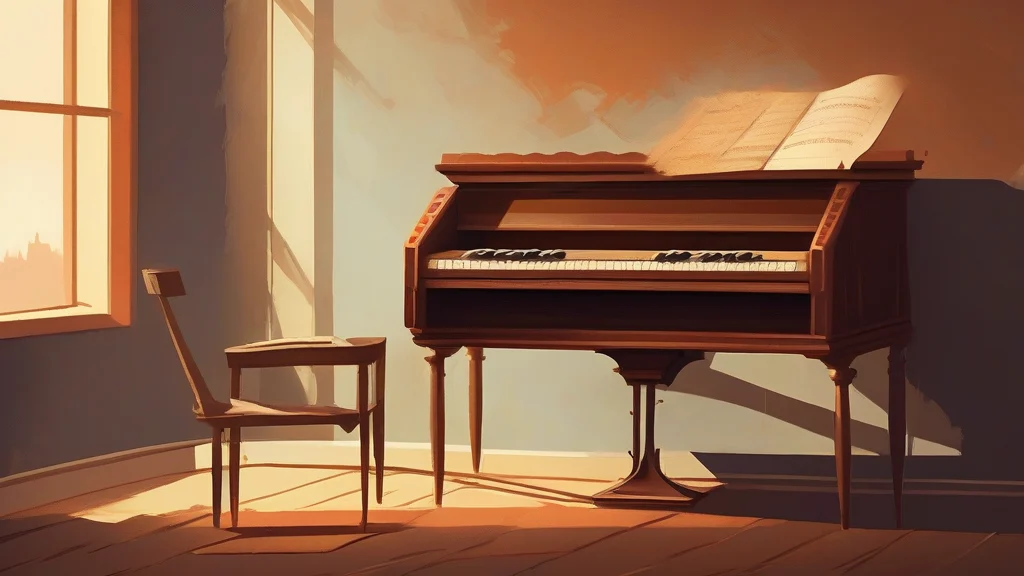
What does harpsichord mean?
A harpsichord is a keyboard instrument in which pressing a key causes a small quill or plectrum to pluck a string. Its bright, clear tone and lively articulation are strongly associated with Baroque music, especially the keyboard works of composers such as Johann Sebastian Bach, George Frideric Handel, and Domenico Scarlatti. The instrument became prominent in Europe during the early 17th century and later declined as the piano became more widely available. Today it is used in early-music performances, historical recordings, and modern compositions inspired by the harpsichord sound. Although a harpsichord looks similar to a piano and has the same basic keyboard layout, it works on a different principle: its strings are plucked rather than struck. The word also carries associations with elegance, historical authenticity, and the distinctive timbre of eighteenth-century keyboard music.
nounA keyboard instrument whose strings are plucked by small quills or plectra when its keys are pressed. It produces a bright, crisp tone and is especially associated with Baroque and early keyboard music.
- A keyboard instrument with plucked strings, used especially in Baroque music and in modern revivals of early keyboard repertoire.
"The concert concluded with a lively piece for solo harpsichord."
"She studied harpsichord at the Royal College of Music."
"The museum's early instruments include a harpsichord, a spinet, and a small square piano."
The plural is formed by adding -s and is used when referring to multiple instruments or different examples of the instrument.
"The collection includes harpsichords from several European traditions."
The harpsichord makes its bright, crystalline sound by plucking strings rather than striking them, a design that helped shape the sound of Baroque music.
Reviewed by Deb Chak, Editor. AI-assisted content curated by RJS Tech Solutions LLP.
Etymology of harpsichord
The English word comes through French from Italian arpicordo, a name formed from elements referring to a harp and a string or chord. The instrument was developed in Europe in the early 17th century, and its terminology reflects a close relationship with the harp in both name and mechanism. The related musical terms arpeggio and arpeggiation ultimately come from the same Latin root for the harp.
Related word forms
How harpsichord is actually used
The word is primarily associated with music and cultural heritage. In British English it is also commonly pronounced without the final r, while American pronunciation is normally rhotic.
Easily confused with harpsichord
A clavichord is a quieter, more delicate keyboard instrument whose strings are struck by tangents, whereas a harpsichord is generally much louder and sounds by plucking its strings.