What does clavichordist mean?
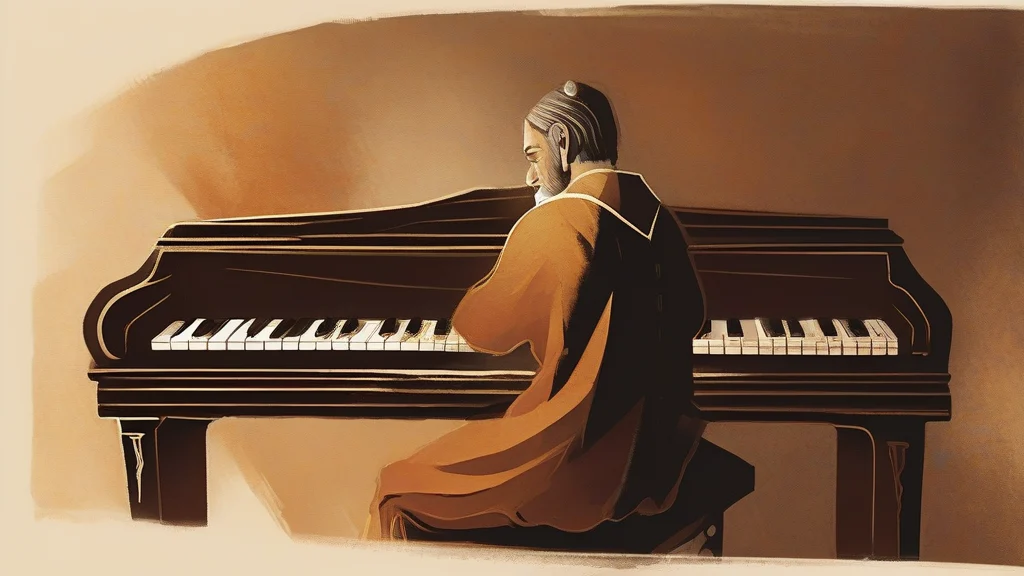
A clavichordist is a musician who performs on the clavichord, a small and exceptionally quiet stringed keyboard instrument that flourished in Europe from roughly the fifteenth century until the late eighteenth century. Because the clavichord's sound is produced by small brass tangents striking its strings, it offers unusually direct touch control — allowing a skilled clavichordist to shape dynamics finely and even apply a subtle vibrato known as Bebung. The term appears chiefly in formal contexts such as concert programmes, music scholarship, and biographies of specialists in historically informed performance, and it is far less common than 'pianist' or 'harpsichordist'. A clavichordist typically commands a repertoire centred on Renaissance and Baroque keyboard music, including works by composers such as C. P. E. Bach, whose keyboard pieces were long championed on this instrument.
nounA person who plays the clavichord, a small, quiet keyboard instrument popular from the late medieval period through the eighteenth century.
- A performer who plays the clavichord.
"The recital opened with a clavichordist performing pieces from the Fitzwilliam Virginal Book."
"As a young clavichordist, she devoted herself to the keyboard works of C. P. E. Bach."
"Only a skilled clavichordist can coax such expressive nuance — even vibrato — from so delicate an instrument."
Regular plural formed with -s; used when referring to multiple players of the instrument collectively.
"Few clavichordists today perform outside the world of historically informed performance."
The clavichord is so quiet that its players could only perform for a handful of listeners — making the clavichordist perhaps the most intimate musician in classical history.
Reviewed by Deb Chak, Editor. AI-assisted content curated by RJS Tech Solutions LLP.
Etymology of clavichordist
The word derives from the Italian-derived English noun clavichord, itself borrowed in the fifteenth century from Medieval Latin clavichordium, combining Latin clavis ('key') and chorda ('string'). The agent suffix '-ist', ultimately from Greek '-istes' via French and Latin, was added to form the name for the instrument's player, following the pattern of terms like 'harpsichordist' and 'violinist'. Related formations sharing the same Latin root clavis include clavier, clavicembalo (the ancestor of the harpsichord), and clavicle.
How clavichordist is actually used
The word is formal and relatively rare, used mainly in musicological writing, early-music programme notes, and biographies of historical performers; in everyday speech one would more often simply say 'a clavichord player'. It carries connotations of scholarly specialization and devotion to historically informed performance.
Easily confused with clavichordist
A harpsichordist plays the harpsichord, a larger plucked-string keyboard instrument, whereas a clavichordist plays the much quieter clavichord.
A pianist plays the piano; the clavichord predates it by centuries and produces sound by striking tangents against strings rather than hammers.