What does clawlike mean?
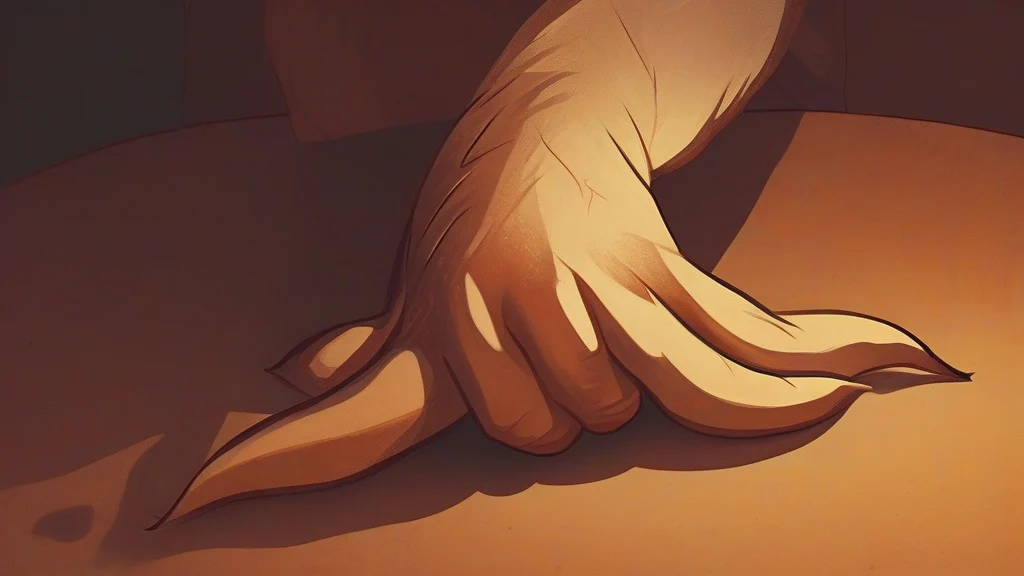
Clawlike is an adjective describing anything that resembles a claw — typically something curved, pointed, and gripping in appearance or function. It is most often applied to physical forms: the talons of a hawk, gnarled tree roots, jagged rock formations, or the curled fingers of a hand. It can also describe action or manner, as in a clawlike grip that seizes something tightly. Because the word is a transparent compound of "claw" plus the suffix "-like", its meaning is instantly understood, yet it carries strong evocative power: writers of nature description, fantasy, gothic fiction, and horror use it to suggest predation, age, decay, or menace. A clawlike branch seems to snatch at passers-by; a clawlike shadow seems ready to close around its victim. The word belongs to neutral descriptive register rather than technical vocabulary, making it equally at home in scientific observation and atmospheric storytelling.
adjectiveResembling a claw in shape, appearance, or function; having curved, pointed features suggestive of an animal's claw.
- Shaped like or resembling a claw, typically curved and pointed.
- (Of a grip or hold) grasping tightly in the manner of a claw.
"The raptor gripped the branch with its long, clawlike talons."
"The old tree's branches twisted into clawlike shapes against the winter sky."
"She felt a clawlike hand seize her shoulder from behind."
From birds of prey to horror-movie monsters, writers reach for "clawlike" when they want readers to feel that sharp, gripping menace.
Reviewed by Deb Chak, Editor. AI-assisted content curated by RJS Tech Solutions LLP.
Etymology of clawlike
The word "claw" descends from Old English "clawu", meaning a claw or hoof, with cognates in other Germanic languages such as Dutch "klauw" and German "Klaue". The suffix "-like" is a native English formative long used to build adjectives meaning "resembling or characteristic of", as in "lifelike" and "warlike". "Clawlike" thus arose as a straightforward English compound combining these two native elements, and it has been used since at least the 19th century to describe claw-shaped forms in both natural history and literature.
How clawlike is actually used
Chiefly descriptive and often figurative; common in nature writing, fantasy, and horror prose. It is a transparent compound of "claw" + "-like", so its meaning is immediately accessible to readers.
Easily confused with clawlike
"Claw" is the noun for the actual curved pointed nail or talon, while "clawlike" is an adjective describing something that merely resembles a claw.