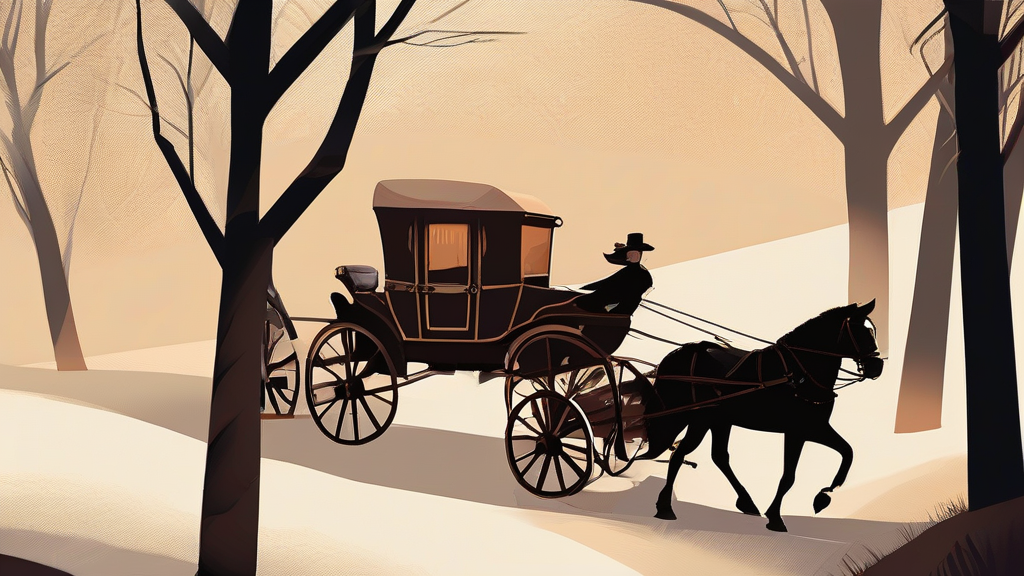
What does coachmen mean?
"Coachmen" is the plural of "coachman" and refers to men whose job was to drive a horse-drawn coach or carriage. In the era before automobiles, coachmen were an essential part of upper-class households and public transport alike, skilled in handling horses and maintaining coaches. They often wore distinctive liveried uniforms, especially in private service, and sat high on the driver's box of the carriage. Today the word survives mainly in historical writing, period drama, heritage tourism, and figurative uses—the word "coaching" itself traces back to the practice of conveying people by coach. Because it is a straightforward plural of coachman, it carries no special grammatical complexity, but its evocative, old-world flavor makes it useful for writers seeking period authenticity. Related terms include stagecoach drivers and cabmen, who served similar roles in public transport.
nounPlural of coachman: men whose occupation is driving a horse-drawn coach or carriage.
- Men employed to drive horse-drawn coaches or carriages, especially as a formal profession in the 18th–19th centuries.
"The coachmen waited outside the estate in the early morning fog, their horses steaming in the cold."
"The wealthy household employed three coachmen to tend the stables and drive the family carriage."
"In period dramas, coachmen are often depicted in formal livery, perched high on the driver's box."
"Coachmen" is already the standard plural of coachman; no further pluralization applies.
"Two coachmen stood waiting beside the carriage entrance."
Every 'coach' you ride today—bus, train carriage, even economy class on a plane—descends from the humble coachman's box seat.
Reviewed by Deb Chak, Editor. AI-assisted content curated by RJS Tech Solutions LLP.
Etymology of coachmen
The word derives from "coach," which entered English in the mid-16th century from French "coche," ultimately from Hungarian "kocsi," named after the village of Kocs where such vehicles were first made. "Coachman" formed by adding the agent suffix "-man" to denote the person who drove the vehicle, first attested in English in the 16th century. Its plural simply adds "-en," following the pattern of other compounds ending in "-man" (like "doormen"). Cognate forms appear across European languages that borrowed the same word for "coach."
Related word forms
How coachmen is actually used
A historical occupational term, now largely confined to period contexts, literature, and heritage settings. The feminine equivalent was 'coachwoman,' though it was far less common. Retains a slightly quaint, old-world connotation today.
Easily confused with coachmen
Coachman is the singular form referring to one driver; coachmen is its plural, denoting two or more such drivers.