
What does coachwhip mean?
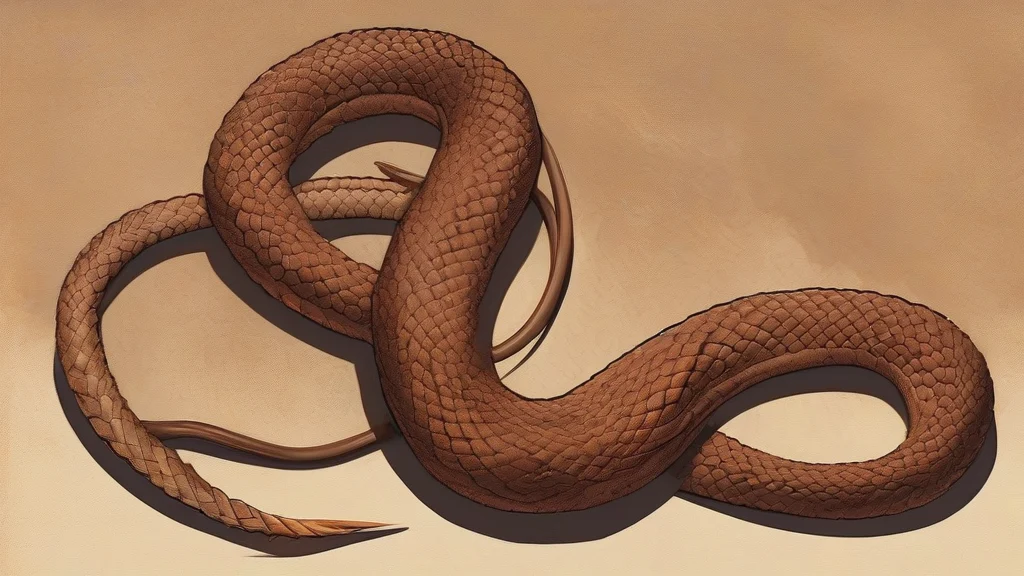
A coachwhip is primarily one of two things: a long, flexible whip of braided leather once used by drivers of horse-drawn coaches, or — more commonly today in North America — a large, fast, non-venomous snake found across the southern United States. The snake earned its name from its appearance: an exceptionally long body that tapers to a thin tail, with fine-textured scales that can look braided like the whip itself. Known scientifically as Masticophis flagellum, it can move remarkably quickly and is valued for controlling rodents. In speech, context makes clear which sense applies: historical writing about stagecoaches points to the whip, while talk of wildlife, deserts, or pine flatwoods points to the reptile. Both senses carry a vivid image of length, speed, and motion.
A long, slender whip of braided leather, historically used by drivers of horse-drawn coaches.
"The driver coiled his coachwhip beside him on the box seat."
A large, fast, non-venomous North American snake (Masticophis flagellum) with a long, tapering body and fine-textured scales.
"A coachwhip darted into the brush before we could get a closer look."
Regular plural; applies to both the whip and the snake.
"Coachwhips are common in the sandy scrub of central Florida."
The coachwhip snake got its name because its long, tapered body and braided-looking scales resemble the leather whip once used to drive stagecoaches.
Reviewed by Deb Chak, Editor. AI-assisted content curated by RJS Tech Solutions LLP.
Etymology of coachwhip
The word coachwhip is a straightforward compound of 'coach' and 'whip', with 'coach' ultimately tracing back to the Hungarian town of Kocs, whose carriages gave English the word in the sixteenth century. The compound arose in English in the seventeenth century to name the whip used to drive such vehicles. Later, naturalists applied the same word to the long, whip-like North American snake because of its shape and braided-looking scales.
How coachwhip is actually used
In everyday modern use the word most often refers to the snake, especially in American South contexts; the whip sense survives mainly in historical or equestrian discussion.
Easily confused with coachwhip
The coachwhip snake is often confused with the black racer, but the coachwhip grows larger and its scales are finely textured rather than smooth and glossy.