What does coalfish mean?
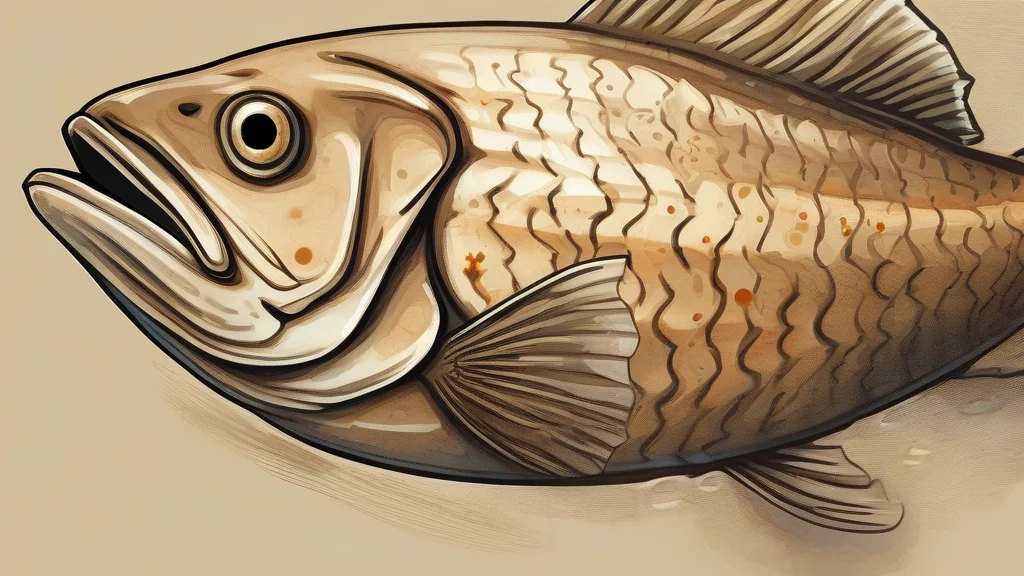
Coalfish is the common British name for Pollachius virens, a large, fast-swimming fish of the cod family that roams the cold waters of the North Atlantic. It is known as saithe across much of northern Europe and simply as pollock in North America, which can make seafood labelling confusing on either side of the ocean. The name likely reflects the fish's sooty, grey-green colouring rather than any link to coal mining. Coalfish has a pale lateral line along its flanks and a lower jaw that projects slightly beyond the upper one. As food it is lean and firm-fleshed, widely used in fish fingers, surimi, and smoking, though it commands less prestige than cod or haddock. Young coalfish are notable for gathering under jellyfish and floating weed for protection, an endearing habit that has made the species a favourite anecdote among naturalists.
A large edible North Atlantic marine fish of the cod family, Pollachius virens, having a dark grey-green back and a pale lateral line; also called saithe, and called pollock in North America.
"The market stall displayed fresh coalfish beside the cod and haddock."
Chiefly British usage; American English typically uses 'pollock' for this species.
The flesh of this fish, eaten fresh or, commonly, smoked.
"She substituted smoked coalfish for the haddock in her kedgeree recipe."
As with many fish names, the plural is usually unchanged ('three coalfish'), though the regular form 'coalfishes' also occurs.
"We hooked half a dozen coalfish before the tide turned."
Young coalfish famously gather beneath jellyfish and floating seaweed for shelter, drifting along like passengers under a living umbrella.
Reviewed by Deb Chak, Editor. AI-assisted content curated by RJS Tech Solutions LLP.
Etymology of coalfish
The word coalfish is a compound formed within English from 'coal' — Old English 'col', meaning charcoal or mineral coal — and 'fish', reflecting the fish's dark, soot-like colouring. It has been in use since at least the early modern period alongside regional names such as coley, greenfish, and saithe. Its closest lexical relatives are other compounds built on the Old English word for coal, such as 'collier' and 'coalfield'; the species itself carries no classical Latin or Greek inheritance into its common name.
How coalfish is actually used
'Coalfish' is chiefly British; North American speakers are far more likely to say 'pollock' or 'saithe' for the same species. The name is thought to derive from the fish's dark, soot-grey colouring rather than any association with coal itself.
Easily confused with coalfish
In Britain 'pollack' usually refers to the closely related Atlantic pollack (Pollachius pollachius), while 'coalfish' is the British name for Pollachius virens, called 'pollock' or 'saithe' in North America.
Cod is a different, more prized member of the same Gadidae family; coalfish is leaner and darker-fleshed.