What does cockateel mean?
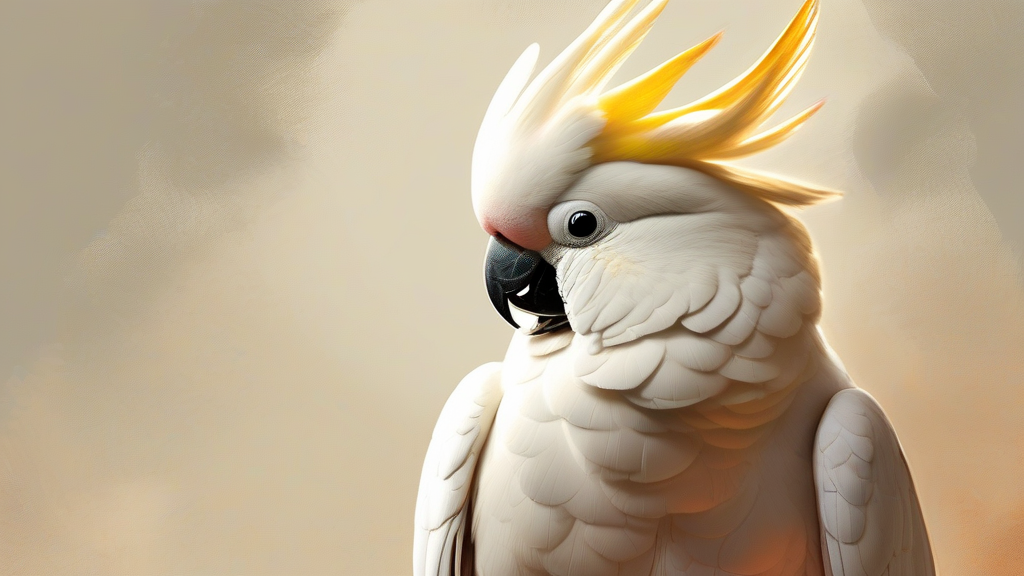
Cockateel is a variant spelling of cockatiel, the small crested parrot native to Australia, prized worldwide as an affectionate and vocal companion bird. Grey-bodied with a bright yellow head and expressive crest in the male, the species (Nymphicus hollandicus) belongs to the cockatoo family and is celebrated for its whistling ability and gentle temperament. As a noun, the word refers to the bird itself, with 'pet cockateel' being a typical phrase. In older dictionaries, 'cockateel' also carried a quite different sense, denoting a male teal duck, though that usage is now archaic. Today the spelling 'cockatiel' overwhelmingly predominates, so writers who choose 'cockateel' may be drawing on historical texts or simply using a less common variant. For everyday purposes, cockatiel is the recommended form, while cockateel remains an interesting footnote in the bird's linguistic history.
nounA cockateel is a small crested Australian parrot, more commonly spelled 'cockatiel' (Nymphicus hollandicus); the word also appears in older sources as a name for a male teal duck.
- A small crested grey-and-yellow Australian parrot (Nymphicus hollandicus), now usually spelled 'cockatiel'.
- An obsolete name for a male teal duck.
"The pet shop's cockateel whistled cheerfully at every visitor who passed its cage."
"Our cockateel learned to whistle the first few bars of a tune within a month."
"In nineteenth-century ornithological lists, the cockateel was entered alongside the common teal."
Regular plural formation; identical to the plural of 'cockatiel'.
"Aviaries across Europe keep cockateels for their sociable nature."
One bird, two identities: 'cockateel' has named both a whistling Australian parrot and, in old dictionaries, a male teal.
Reviewed by Deb Chak, Editor. AI-assisted content curated by RJS Tech Solutions LLP.
Etymology of cockateel
The word derives ultimately from the Malay 'kakak tua' ('older brother'), which passed through Dutch into English as 'cockatoo'; the diminutive 'cockatiel' blends 'cockatoo' with the '-tiel' ending, and 'cockateel' arose as a variant of that blend, recorded by the early nineteenth century. Its unrelated-seeming teal sense simply compounds 'cock' (the male of a species) with 'teal', following the pattern seen in words like 'cock pheasant'.
How cockateel is actually used
The standard modern form is 'cockatiel'; 'cockateel' survives mainly as a variant spelling and in older references. The teal sense is archaic and rare.
Easily confused with cockateel
A teal is a small freshwater duck, whereas a cockateel is either that duck's male or (in modern usage) a small Australian parrot.
'Cockatiel' is the standard modern spelling for the Australian parrot, while 'cockateel' is an older or less common variant spelling.