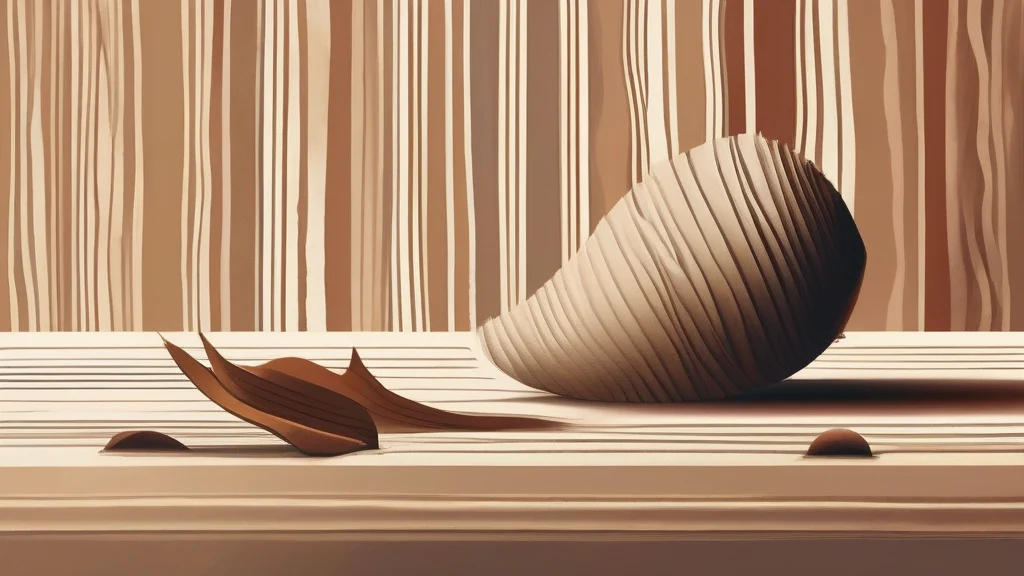
What does cockling mean?
Cockling is the wrinkling or puckering of a normally flat surface into small, irregular ridges and ripples. It is most commonly applied to paper and fabric: humidity, moisture, heat, or poor mounting can cause sheets to buckle and wave, a defect that conservators, printers, and framers work hard to prevent. By extension, the word can describe a light rippling of water, as in the older literary phrase 'a cockling sea'. The term derives from 'cockle', the ribbed shellfish, whose corrugated shell suggested the appearance of the wrinkles themselves. Cockling carries no strong emotional connotation; it is a precise, descriptive word valued in technical registers where 'wrinkling' would be too general. Anyone who has watched a well-printed page curl and ripple after a spill of rain has observed cockling firsthand, even if they never knew it had a name.
Wrinkling or puckering of a flat material such as paper or fabric into small irregular ridges.
"The conservator flattened the cockling in the print before reframing it."
Typically treated as an uncountable mass noun describing a condition or defect.
A rippling or undulating motion of a water surface.
"A light wind raised a soft cockling on the lake."
Literary and somewhat dated; found mainly in older British prose.
Cockling is almost always used as an uncountable noun referring to a condition or phenomenon; a plural form is rare and generally unnecessary.
"There was noticeable cockling along the spine of the old volume."
That wavy warp in an old book page has a name — and it comes from the same word as the shellfish on your dinner plate.
Reviewed by Deb Chak, Editor. AI-assisted content curated by RJS Tech Solutions LLP.
Etymology of cockling
Cockling derives from the verb 'cockle', meaning to wrinkle or pucker, which in turn comes from the noun 'cockle' — the edible marine mollusc with a distinctly ribbed shell. That noun entered Middle English from Old French 'coquille', ultimately from Latin 'conchylium', borrowed from Greek 'konchylion', meaning a shellfish. The wrinkling sense arose from the visual resemblance between puckered material and the ridged cockle shell, and has been in use since at least the early modern period.
Related word forms
How cockling is actually used
Most often encountered in technical contexts such as bookbinding, conservation, printing, and textiles, where it names a defect or condition rather than an action. The nautical sense ('a cockling sea') is literary and now somewhat dated, appearing chiefly in older British writing.
Easily confused with cockling
A cockle is an edible saltwater clam or, as a verb, the act of wrinkling something, whereas cockling refers specifically to the resulting wrinkled or rippled state.
Cackling means laughing harshly or making a hen's squawking sound, while cockling describes wrinkling or rippling.