
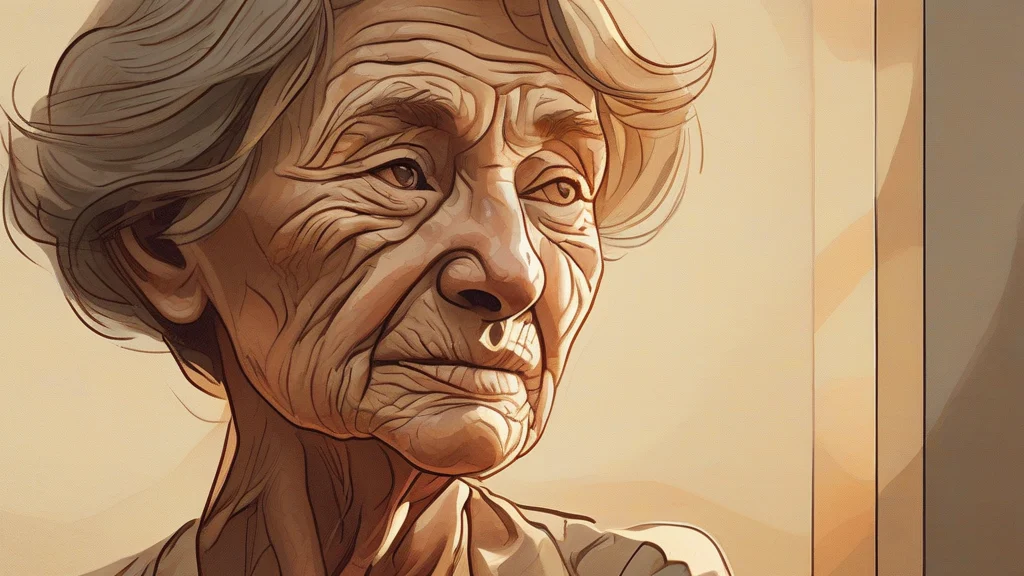
What does wrinkling mean?
Wrinkling is the formation of small creases, folds, or ridges in a material or on the skin. As a verb, it can describe the process directly, as in “the heat is wrinkling the plastic,” or the resulting change, as in “her forehead wrinkled in concentration.” The word is especially common in descriptions of skin, fabric, paper, leather, and other flexible surfaces. Its connotations depend on context: wrinkling in skin may suggest ageing or strain, while wrinkling in cloth can indicate that a garment is poorly fitted, badly stored, or unsuited to heat. The noun usually names the process as a whole rather than a single crease, which is more commonly called a wrinkle. Although “wrinkling” sounds like an everyday description, it is also used in technical writing about materials, anatomy, physics, and geology.
The process of forming creases or folds, or the condition of being creased or wrinkled.
"Moisturising the skin can reduce the appearance of fine wrinkling."
Normally uncountable when referring to the process; “wrinklings” is rare and more likely to denote separate instances or traces of wrinkling.
To form small creases or folds in something, or to become creased or wrinkled.
"He frowned, wrinkling his forehead in concentration."
Common in both transitive and intransitive uses. “Wrinkle” is the more usual verb in many simple statements, while “wrinkling” often emphasizes an ongoing or visible process.
Rare; the noun is normally uncountable.
"Fine wrinklings appeared along the seam after the fabric was washed."
The wrinkle family reaches back to Old English, where its root conveyed the idea of twisting or writhing.
Reviewed by Deb Chak, Editor. AI-assisted content curated by RJS Tech Solutions LLP.
Where does wrinkling come from?
English “wrinkling” was formed by adding the gerund-forming suffix -ing to “wrinkle,” creating both a noun and a verb. “Wrinkle” developed from Middle English forms based on late Old English wrinclian, itself related to Old English wrincan, meaning “to wring” or “to writhe.” This origin links “wrinkling” with cognates such as “wring” and with related forms including “wrinkled” and “wrinkly.”
How wrinkling is actually used
Wrinkling is neutral in register and common in both everyday and technical contexts. When applied to skin, it may suggest ageing, fatigue, or repeated contraction; when applied to fabric or other materials, it usually describes an unwanted change in surface texture. The noun is normally used as an uncountable process noun.
Easily confused with wrinkling
Wrinkling means forming creases or folds, whereas wringing means twisting or squeezing something, often to extract liquid.