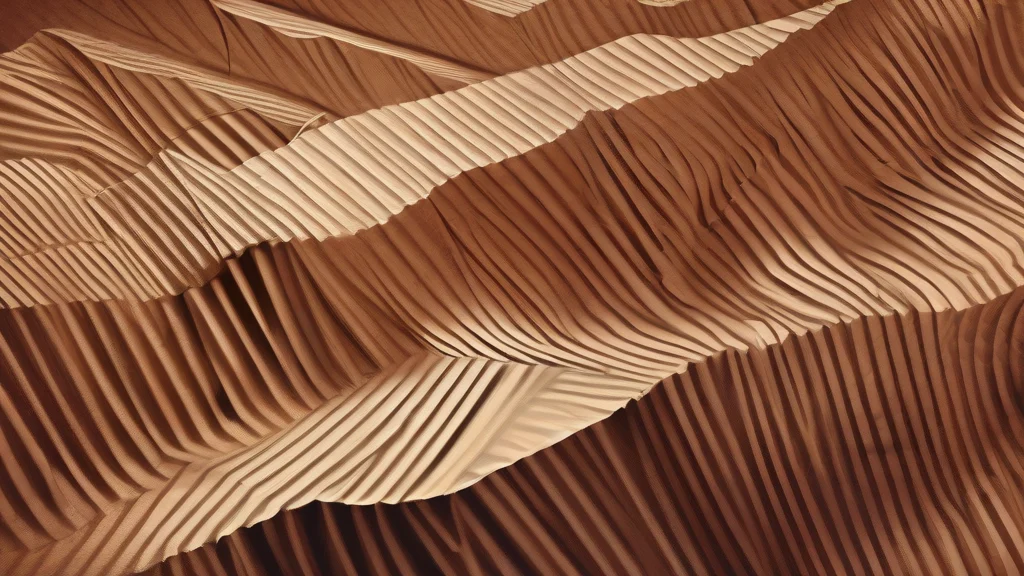
What does corrugating mean?
"Corrugating" is the present participle and gerund of the verb "corrugate," meaning to shape something into a regular series of parallel ridges and grooves. The process is best known from industry: corrugating metal gives roofing and siding panels stiffness without adding weight, and corrugating paper produces the fluted middle layer that makes cardboard strong enough to protect goods in transit. The word can also describe natural wrinkling, as when worry leaves someone's forehead corrugated with lines. It derives from Latin "corrugare," meaning "to wrinkle together," combining "com-" (together) with "ruga" (a wrinkle or fold). Because the ridged structure adds rigidity while remaining lightweight, corrugating carries connotations of practical engineering rather than decoration. Though common in technical writing about materials and manufacturing, it remains relatively rare in casual conversation, where simpler words like creasing are preferred.
Forming into parallel ridges and grooves, or wrinkling into folds.
"The factory spent the afternoon corrugating sheets of aluminum for export."
Typically used transitively in industrial contexts; occasionally intransitive or figurative when describing wrinkling skin.
The action or process of shaping material into ridges and grooves.
"Corrugating adds considerable strength to an otherwise thin sheet of paper."
Every sheet of cardboard you've ever touched got its strength from corrugating — the same ridges-and-grooves trick that lets a flimsy paper layer hold up shipping boxes worldwide.
Reviewed by Deb Chak, Editor. AI-assisted content curated by RJS Tech Solutions LLP.
Etymology of corrugating
"Corrugating" comes from Latin "corrugare," meaning to wrinkle or fold together, formed from the prefix "com-" (together) and "ruga" (a wrinkle). The verb entered English in the early 17th century, initially describing physical wrinkling before taking on its industrial sense of forming ridged surfaces in metal, paper, and board. It shares its root with "rugose" (wrinkled) and "corrugator" (the muscle that knits the brows), both drawn from the same Latin noun.
Related word forms
How corrugating is actually used
"Corrugating" is most at home in technical and industrial contexts such as manufacturing, packaging, and construction; its figurative use for wrinkling skin or features is more literary and less common. It is a formal register word in everyday speech, where speakers more often say "creasing" or "crinkling."
Easily confused with corrugating
"Corrugating" means shaping into ridges or wrinkles, while "corroborating" means confirming or supporting a statement with evidence.