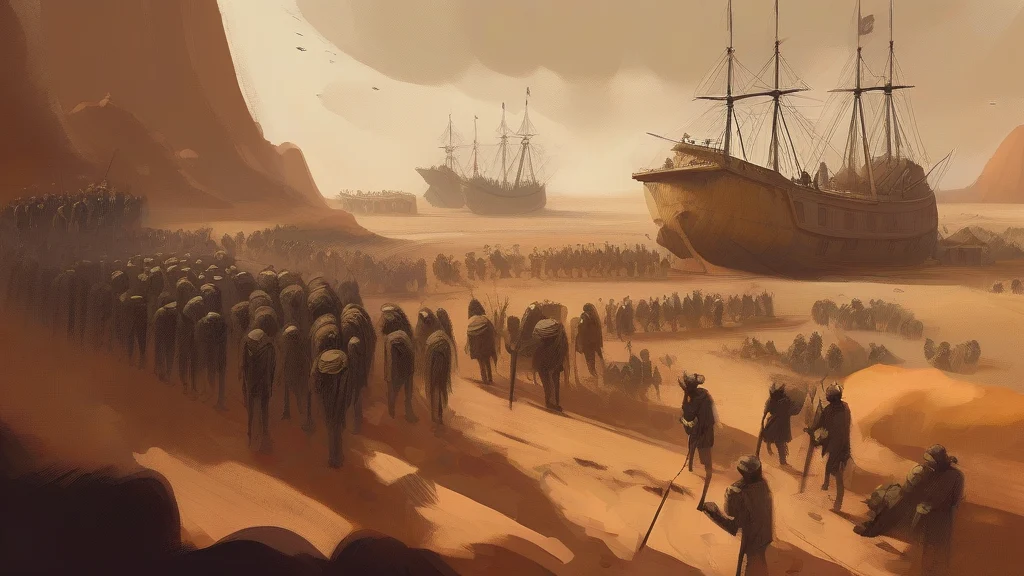
What does colonization mean?
Colonization is the process by which people from one territory establish and maintain settlements in another, usually exercising political and economic control over the land and its existing inhabitants. Historically, the term is most closely associated with European powers' overseas expansion from the fifteenth century onward, which reshaped the Americas, Africa, Asia, and Oceania and left legacies still debated today. Because of this history, colonization often carries negative connotations in contemporary usage, evoking conquest, displacement, and exploitation. The word also has neutral scientific applications: ecologists speak of the colonization of new habitats by plants and animals, and physicians use it to describe microbes establishing themselves in a body without necessarily causing disease. Derived from Latin 'colonus' (farmer or settler), it remains a central term in history, politics, biology, and discussions of future space settlement.
nounThe action or process of establishing a colony among or in a territory, typically involving the settlement and political control of one region by people from another country.
- The establishment of a colony by settlers from a foreign power, involving settlement and often political domination of an existing population.
- The spread of a species into a new habitat or area (used in ecology and biology).
- The establishment of microbial growth in a new host or environment (used in medicine).
"The colonization of Australia by Britain began in 1788 with the arrival of the First Fleet."
"The colonization of the Americas transformed both the Old World and the New."
"Ecologists studied the rapid colonization of the volcanic island by plants and insects."
Rarely used; colonization is usually treated as an uncountable mass noun referring to a general process. A plural may appear when discussing multiple distinct historical instances.
"Historians have compared the colonizations of the Americas and of Australia."
Humans have colonized nearly every continent on Earth — and some scientists argue we are now planning to do it all over again, this time on Mars.
Reviewed by Deb Chak, Editor. AI-assisted content curated by RJS Tech Solutions LLP.
Etymology of colonization
Colonization derives from the Latin 'colonia', meaning a settled estate or outpost, itself rooted in 'colonus', a farmer or tiller of soil, and ultimately the verb 'colere', to cultivate or inhabit. The term entered English via French 'colonisation' in the early modern period as European overseas expansion intensified. It shares its root with cognates such as colony, colonial, and cultivate, all tracing back to the same Latin verb for tilling and dwelling.
Related word forms
How colonization is actually used
In modern discourse, especially regarding historical European expansion, the word carries strongly negative connotations tied to exploitation and dispossession. In scientific contexts (ecology, medicine), it is entirely neutral. British spelling uses 'colonisation'; American spelling uses 'colonization'.
Easily confused with colonization
Colonization is the physical act of settling and taking control of a territory, while colonialism is the broader ideology and policy that justifies and drives such control.