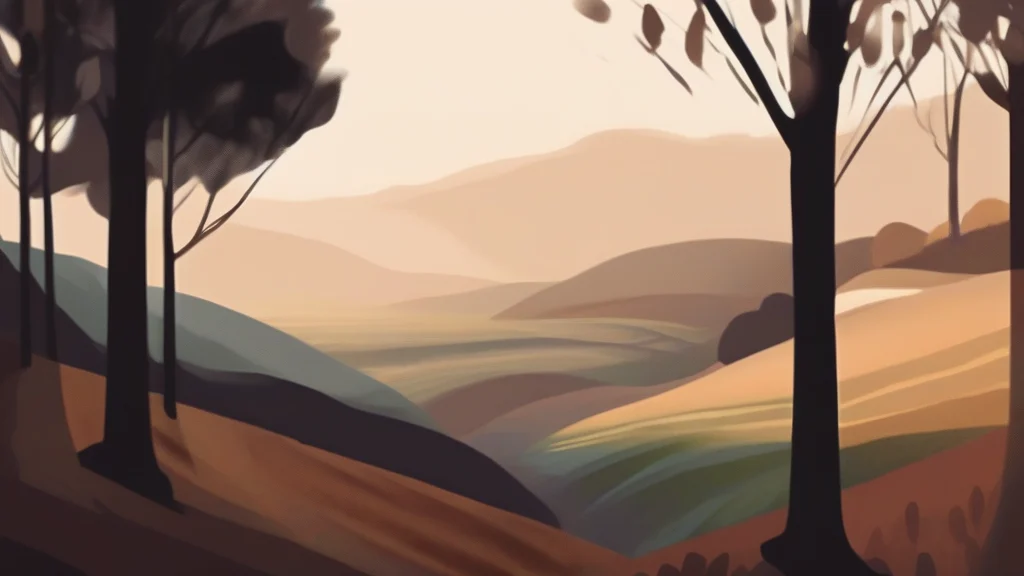
What does combe mean?
A combe is a short, steep-sided valley or hollow, most characteristically found cutting into the chalk and limestone uplands of southern England. The word belongs firmly to the vocabulary of landscape and place: it flourishes in Devon, Dorset, and Somerset, and survives prominently in place names such as Ilfracombe, Salcombe, and Combe Martin. A combe is usually dry or carries only a small stream, its sheltered slopes often clothed in woodland or old pasture, which has long made these valleys favored sites for villages and quiet footpaths. Derived ultimately from a Celtic word for a valley, it entered Old English as "cumb" and remains a living term among walkers, geographers, and nature writers. Though little used outside Britain, the word evokes a precise and picturesque kind of terrain—an enclosed, intimate valley quite distinct from a broad river valley or a dramatic gorge.
nounA short, steep-sided valley or hollow, typically found in chalk or limestone uplands such as the southern English downs.
- A short, steep-sided dry valley or hollow, especially one in chalk or limestone country in southern England.
"The footpath wound down into a secluded combe where sheep grazed on the steep turf."
"The village nestled at the mouth of a green combe that opened onto the sea."
"Hikers climbed out of the combe to enjoy sweeping views across the downs."
Standard pluralization applies; the plural is rare outside topographic writing and lists of place features.
"The map marked several wooded combines along the escarpment."
Hidden inside dozens of English place names like Ilfracombe and Salcombe lies the ancient Celtic word for valley — 'cwm' survives almost unchanged after more than a thousand years.
Reviewed by Deb Chak, Editor. AI-assisted content curated by RJS Tech Solutions LLP.
Etymology of combe
The word derives from Old English "cumb," meaning a short valley or hollow, which was itself borrowed from a Brittonic Celtic root represented today by Welsh "cwm." This Celtic origin reflects the word's deep roots in the landscapes of western and southern Britain. Variants such as "coomb" and "coombe" arose through later spelling variation, especially in place names, while the form "combe" became the standard dictionary spelling.
How combe is actually used
"Combe" carries strong regional flavor: it appears chiefly in southern England, especially Devon, Dorset, Somerset, and the chalk downlands, and is heavily used in place names. The spellings "coomb" and "coombe" are common variants, particularly in place-name usage. The word is literary and topographical rather than everyday vocabulary elsewhere.
Easily confused with combe
A comb is a toothed implement for grooming hair or a honeycomb structure, whereas a combe is a small valley or hollow in hilly terrain.
A tomb is an underground burial chamber, while a combe is a natural landform—a short valley cut into hillsides.