What does cwm mean?
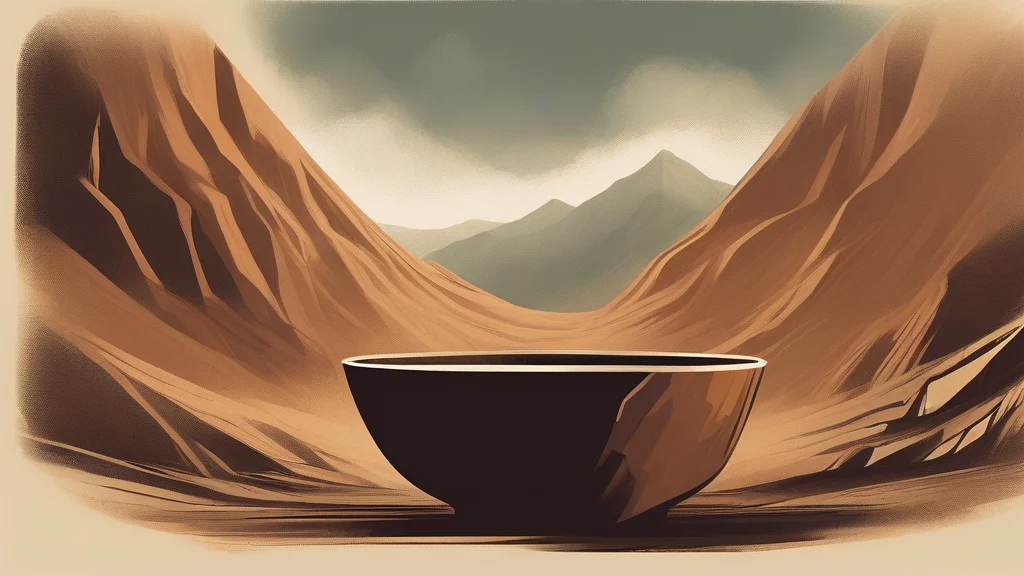
A cwm is a steep-walled, bowl-shaped hollow found at the head of a mountain valley, carved by the erosive action of a glacier. The word is borrowed directly from Welsh, where it means 'valley', and is pronounced 'koom' rather than as spelled. It serves as the British term for what geographers elsewhere call a 'cirque' (from the French) or, in Scotland, a 'corrie'. Cwms often contain tarns — small lakes left behind when glaciers retreat — making them features of particular interest to hikers, geologists, and photographers of dramatic upland landscapes. Although technical in register, appearing mainly in geography writing and guidebooks, the word carries strong associations with the rugged terrain of Snowdonia and other Welsh mountains. Its unusual spelling makes it a memorable curiosity of English vocabulary, and it remains one of the most distinctive loanwords in the language's geographic lexicon.
nounA steep-sided, bowl-shaped hollow or valley at the head of a mountain, formed by glacial erosion; the equivalent of a cirque.
- A steep-walled, semi-circular basin at the head of a mountain valley formed by glacial erosion (equivalent to cirque or corrie).
"The climbers pitched camp in a windswept cwm high above the tree line."
"Snow lingered well into June on the shaded floor of the cwm."
"From the ridge they looked down into a vast cwm carved out by ice during the last glaciation."
The standard plural simply adds -s; it is not commonly encountered outside geographical writing.
"Glaciation left several deep cwms along the eastern face of the range."
It's pronounced 'koom' despite starting with three letters — cwm is one of English's most borrowed words from Welsh.
Reviewed by Deb Chak, Editor. AI-assisted content curated by RJS Tech Solutions LLP.
Etymology of cwm
The word 'cwm' comes directly from Welsh, meaning valley or hollow, and entered English usage through descriptions of Welsh mountain scenery. It is related to the Old English 'cumb', which survives in English place-names and in the word 'coombe' (or 'combe'), denoting a small valley in southern England. These terms share an ancient Brittonic root, making cwm and combe true linguistic relatives across the Celtic-Germanic divide in Britain.
How cwm is actually used
Cwm is primarily associated with Wales and British mountaineering literature, where it appears frequently alongside its regional synonyms 'cirque' and 'corrie'. The pronunciation is unintuitive for English speakers — it is said as 'koom', with the w acting as part of the vowel sound. It is a somewhat technical geographical term, common in physical geography texts but rare in everyday conversation.
Easily confused with cwm
A 'comb' is a toothed implement for grooming hair (or the fleshy crest on a bird's head), whereas a 'cwm' is a glacially carved mountain hollow.
'Coombe' (also spelled combe) is an English word for a small valley, closely related to cwm but typically denoting a longer valley rather than a steep-walled, bowl-shaped hollow.