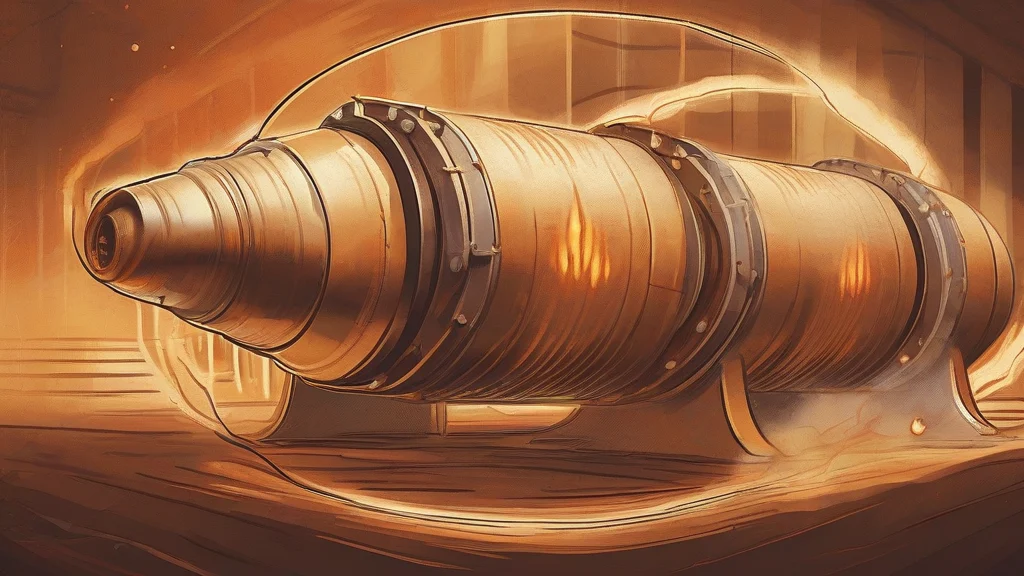
What does combustor mean?
A combustor is the chamber in which fuel is burned within an engine or industrial system — most famously the combustion chamber of a gas turbine or jet aircraft engine. In a typical gas turbine, compressed air from the compressor enters the combustor, where fuel is injected as a fine spray and burned continuously at extremely high temperatures. The resulting hot, expanding gases then rush through the turbine blades, producing thrust or driving a generator. Combustors come in several designs, including annular and can-type configurations, and their efficiency directly affects an engine's fuel consumption and emissions. The word belongs firmly to technical vocabulary, appearing in aerospace, mechanical engineering, and power-generation literature rather than everyday speech. Because modern combustors must sustain flames far hotter than any material can withstand indefinitely, they represent one of the more remarkable feats of thermal engineering, making them a genuinely interesting subject beyond their specialized origins.
nounA combustor is a chamber or device in which fuel is burned, especially the combustion chamber of a gas turbine or jet engine where fuel mixes with compressed air and ignites.
- The combustion chamber of a gas turbine or jet engine, where fuel and compressed air are mixed and burned.
- More generally, any chamber or apparatus designed for the controlled burning of fuel.
"The engine's combustor was redesigned to burn fuel more cleanly and efficiently."
"Engineers tested a new low-emission combustor that cuts nitrogen oxide output dramatically."
"Fuel enters the combustor as a fine spray, where it ignites in a stream of highly compressed air."
Standard regular plural; used when referring to multiple engines or multiple combustion chambers within a single engine.
"Both engines were fitted with redesigned combustors to meet new emissions standards."
Inside every jet engine at 35,000 feet, the combustor sustains a continuous flame hotter than lava — and no solid material could survive touching it, so engineers cool it with the very air flowing past.
Reviewed by Deb Chak, Editor. AI-assisted content curated by RJS Tech Solutions LLP.
Etymology of combustor
Combustor derives ultimately from the Latin verb comburere (also rendered comburō), meaning 'to burn up' or 'to consume by fire', formed from com- (an intensive prefix meaning 'thoroughly') plus a root related to burning. The English word combustion appeared around the early 15th century via Old French, and the agent-noun form combustor was later constructed on this Latin stem, much like other Latin-derived -or nouns. It shares its origin with related words such as combustible and combustive, all carrying the core sense of burning or being consumed by fire.
How combustor is actually used
Combustor is a technical term used almost exclusively in engineering contexts — aerospace, mechanical engineering, and power generation. It is rarely encountered outside specialist literature and is not typically used in general conversation, where terms like 'engine' or 'burner' would be preferred.
Easily confused with combustor
Combustion is the chemical process of burning itself, while a combustor is the physical chamber or device in which that burning takes place.
A compressor squeezes air to high pressure before it reaches the combustor; the two are adjacent but distinct components of a gas turbine.