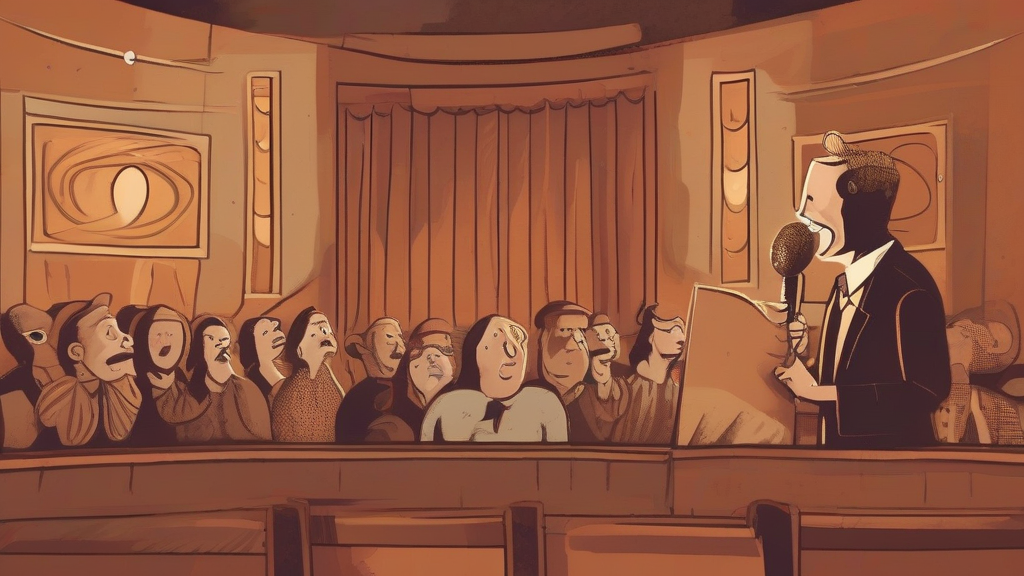
What does comedy mean?
Comedy is a form of drama, literature, film, or entertainment designed to amuse an audience, traditionally distinguished by its happy ending and lighter tone in contrast to tragedy. In classical Greek theatre, comedy referred to plays that ended well for their characters, whatever their subject matter; this sense survives in titles like Dante's Divine Comedy. In modern usage the word most often denotes humorous entertainment of any kind, from sitcoms and stand-up routines to farce and satire. Comedy relies on timing, incongruity, exaggeration, and wit, and it ranges from gentle humour to sharp social critique. As an adjective-derived family it includes comedic and comedian, and established forms include romantic comedy, black comedy, and situation comedy. Because laughter is universal, comedy remains one of the most enduring and adaptable genres across cultures and media.
nounA genre of drama, film, or literature intended to amuse, typically ending happily; also, in general use, anything humorous or funny.
- A dramatic or cinematic work, or genre of such works, that is humorous or ends happily
- Humorous writing, performance, or entertainment generally
- Amusing or laughable aspects of a situation (as in 'the comedy of the situation')
"The troupe's new comedy had the audience laughing from the opening scene to the final bow."
"She has written several hit romantic comedies for the stage."
"He began his career doing stand-up comedy in small London clubs."
Standard plural, used chiefly when referring to multiple works of the comedic genre.
"The festival showcased comedies from twelve different countries."
The word 'comedy' originally had nothing to do with being funny — in ancient Greece it simply meant a play with a happy ending, as opposed to one where everyone dies.
Reviewed by Deb Chak, Editor. AI-assisted content curated by RJS Tech Solutions LLP.
Etymology of comedy
The word comedy derives from the Greek kōmōidia, meaning a comic drama, itself formed from kōmos ('revel, merrymaking') and ōidē ('song'). It entered Latin as comoedia, passed into Old French comedie, and arrived in English via Middle French in the late Middle Ages. Its earliest English senses followed the classical idea of a play with a happy ending; the broader modern sense of humorous entertainment developed later. Related words include comic, comical, and comedian, all sharing the same Greek root.
Related word forms
How comedy is actually used
In everyday speech 'comedy' often means simply 'funny material' (e.g., stand-up comedy), while in literary criticism it retains the older technical sense of a work with a happy ending — Dante's Divine Comedy is a 'comedy' despite its sombre subject matter.
Easily confused with comedy
Comedy is a work or style meant to amuse and typically ending happily, whereas tragedy is a serious work depicting downfall or sorrow.