What does compotier mean?
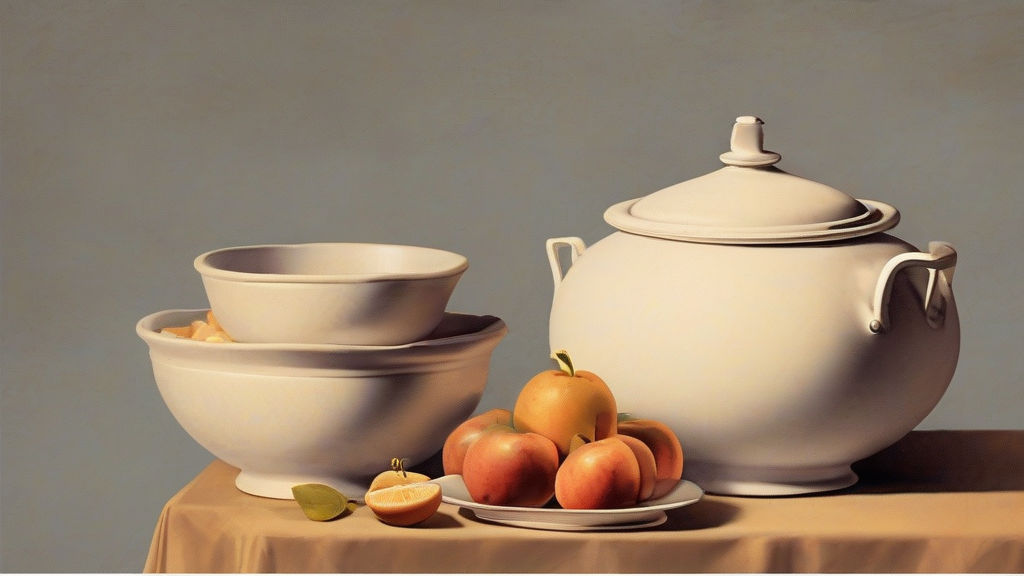
A compotier is a shallow dish or bowl, frequently raised on a stem or pedestal, designed for serving compotes — fruit cooked in syrup — along with fresh fruit, nuts, or other sweet delicacies. Traditionally crafted from silver, porcelain, or cut glass, compotiers were staple pieces of formal table settings from the eighteenth century onward, and ornate examples by famous makers remain sought after by collectors of antique tableware today. The word comes directly from the French 'compotier', which is itself derived from 'compote', so the dish's name literally means the vessel belonging to that dessert. Though largely supplanted in modern kitchens by generic bowls, the term survives in fine dining, hospitality writing, and the antiques trade, where it carries connotations of elegance, formality, and old-world refinement.
nounA shallow dish or bowl, often on a stem or pedestal and typically made of silver, porcelain, or glass, used for serving compotes, fruit, or other sweet dishes.
- A shallow, often footed dish or bowl of silver, porcelain, or glass used for serving compotes, stewed or fresh fruit, and other sweet dishes.
- In antique collecting and tableware contexts, a category of decorative serving vessel, often elaborately ornamented.
"She arranged the poached pears in a silver compotier at the center of the table."
"The butler set a crystal compotier heaped with sugared figs before each guest."
"Among the wedding silver was a Victorian compotier with an ornate pierced rim."
The plural takes the standard English '-s'; because it matches the French spelling, some writers leave the form unchanged, but no special rule applies.
"The auction lot included three matching silver compotiers."
The word for this elegant serving dish is simply French for 'the thing that holds your compote' — the dessert named the dish, not the other way round.
Reviewed by Deb Chak, Editor. AI-assisted content curated by RJS Tech Solutions LLP.
Etymology of compotier
The word 'compotier' was borrowed into English from French, where it denotes the same kind of serving dish. It derives from 'compote' — a dessert of fruit cooked in sugar syrup — which traces back through Old French to the Latin 'composita', meaning 'put together', from the verb ' componere' ('to place together'). Thus the compotier is etymologically 'the dish for the composed thing', reflecting the way compote combines multiple fruits into one preparation. The word entered English usage in the eighteenth century alongside the fashion for elaborate formal desserts and the specialized silverware and porcelain they required.
Related word forms
How compotier is actually used
A somewhat formal or specialized term encountered mainly in fine-dining menus, etiquette guides, antique catalogues, and descriptions of historic table settings; in everyday English most speakers would simply say 'dish' or 'bowl'. The plural is usually anglicized as 'compotiers', though the original French plural 'compotiers' is identical in form.
Easily confused with compotier
A compote is the fruit dessert itself, while a compotier is the dish in which such a dessert is served.