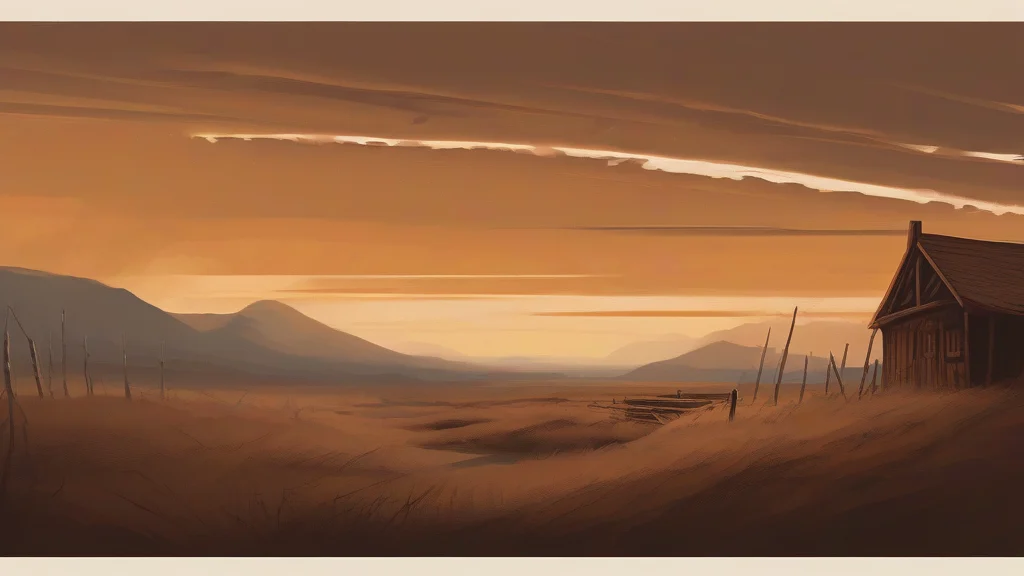
What does frontier mean?
A frontier is the outermost edge of a settled or explored territory — the shifting line where known land gives way to the unknown. Historically, it described the border zones between empires, states, or civilizations, most evocatively the American West, where successive waves of settlers pushed the frontier ever further until the census declared it closed in 1890. Beyond geography, the word has taken on a powerful metaphorical life: scientists, engineers, and artists speak of the frontiers of knowledge, medicine, or technology to describe the very limits of what humanity currently understands or can achieve. This dual character makes 'frontier' an unusually versatile word. It connotes adventure, risk, and opportunity, but also uncertainty and danger — a frontier is where rules thin out and anything might happen. Whether marking a national border, a research boundary, or the leading edge of human endeavor, the term captures our enduring fascination with what lies just beyond the map's margin.
nounThe outermost boundary or border of a country or territory; more broadly, the limit of what is known, achieved, or explored in a particular field.
- A border region or outer edge of a settled territory, especially one marking the limit of expansion or civilization.
- The extreme limit of understanding, achievement, or exploration in a field (e.g. science, technology).
"Pioneers pushed steadily across the frontier in search of new land."
"Settlers gathered at the frontier, eager to stake their claim on the land beyond."
"Quantum computing represents the current frontier of information science."
The plural 'frontiers' is standard and typically appears in the metaphorical sense, as in 'pushing back the frontiers of knowledge,' or when referring to multiple border regions.
"Medical research continues to expand the frontiers of human longevity."
The American 'frontier' was officially declared closed by the U.S. Census in 1890 — and historians argue that very announcement reshaped how Americans saw themselves.
Reviewed by Deb Chak, Editor. AI-assisted content curated by RJS Tech Solutions LLP.
Etymology of frontier
The word 'frontier' derives from the French 'frontière', meaning border, which in turn comes from 'front', ultimately rooted in Latin 'frons' (genitive 'frontis'), meaning forehead or forepart. It entered English in the early 15th century in its military sense of the boundary facing an enemy. Its Romance relatives include French 'frontière' and Italian 'frontiera', all sharing the same Latin root as English words like 'front' and 'confront'.
Related word forms
How frontier is actually used
In American history, 'the frontier' carries strong cultural connotations of westward expansion, self-reliance, and opportunity — a sense famously central to Frederick Jackson Turner's 1893 'frontier thesis.' In British usage the word more often refers simply to a border between countries. The metaphorical sense ('the frontiers of knowledge') is common in formal and academic writing.
Easily confused with frontier
"Front" refers to the foremost part or position of something, while "frontier" specifically denotes a remote border region or the outer limits of knowledge or activity.
A "border" is a precisely defined political boundary line, whereas a "frontier" suggests a zone of settlement or exploration at the edge of developed territory.