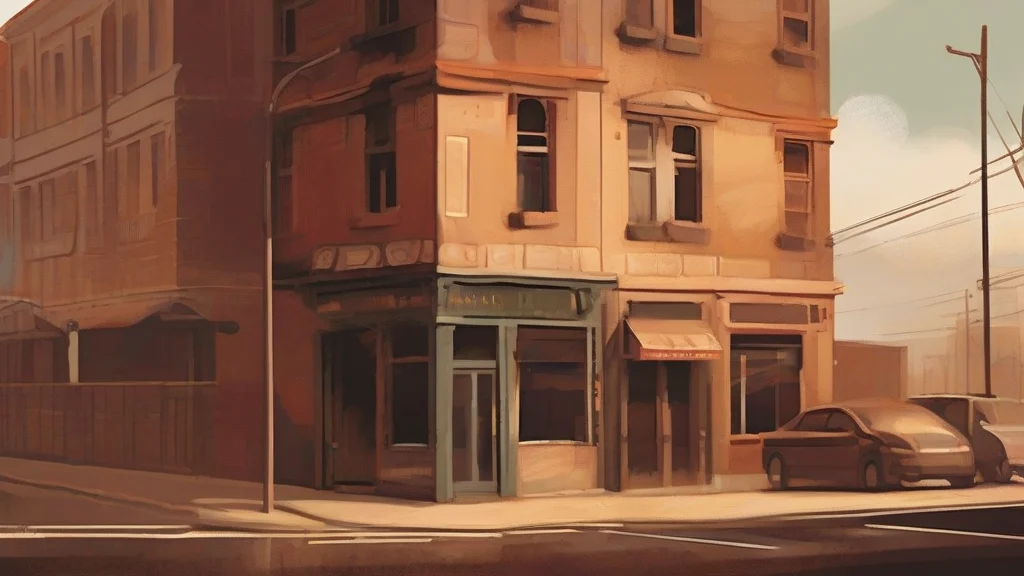
What does frontage mean?
Frontage refers to the front boundary of a plot of land or building — specifically, the extent to which it faces onto a road, street, river, or coastline. In property law and real-estate practice it is most commonly a measurement: a shop might have twenty metres of street frontage, or a farm two hundred metres of river frontage. Because access, visibility, and light all depend on how much a site faces a public thoroughfare, frontage is a key factor in valuing land, and commercial premises in particular are often priced by the linear foot or metre of their frontage. The word also denotes the physical front of a structure itself, though this use overlaps with terms like facade. Frontage belongs largely to the technical vocabulary of surveying, planning, and conveyancing; it is precise and professional rather than colloquial, which makes it a valuable word for anyone navigating property documents.
nounThe front part of a building or piece of land, especially the side that faces a street or waterway; also, the extent of land along a road, river, or other frontage measured in linear feet or metres.
- The extent of land along a street, road, river, or coastline, measured in linear units and often used in valuing property.
- The front part of a building or plot that faces onto a street or waterway.
- The direction or side that something faces.
"The shop occupies a corner site with generous frontage onto the high street."
"The warehouse had its own frontage on the canal, allowing barges to unload directly at the loading dock."
"Because the plot offered sixty feet of prime road frontage, the estate agent priced it well above neighbouring lots."
Pluralises normally when referring to multiple plots or multiple sides each with their own measured frontage; singular is more common when describing one site's frontage.
"Corner plots are prized because they have two separate frontages, one onto each street."
In real estate, frontage is literally money: shops on a high street can be priced by the foot of pavement they touch.
Reviewed by Deb Chak, Editor. AI-assisted content curated by RJS Tech Solutions LLP.
Etymology of frontage
Frontage comes from French 'frontage', formed from 'front' with the suffix '-age', which typically turns a noun into a noun expressing action, product, or extent. 'Front' itself derives from Latin 'frons' (genitive 'frontis'), meaning forehead or front. English adopted the word in the early eighteenth century as surveying and property law formalised the idea of measuring land by its street-facing extent. Its cousins from the same Latin root include frontal, confront, and affront.
How frontage is actually used
Frontage is chiefly used in property, planning, and legal contexts — deeds, zoning rules, and valuation reports. It carries a technical, professional register rather than an everyday one; in casual conversation people usually say 'front' instead.
Easily confused with frontage
A façade is the architectural face or exterior front of a building itself, while frontage refers to the boundary of land or the extent of a plot facing a road or body of water.