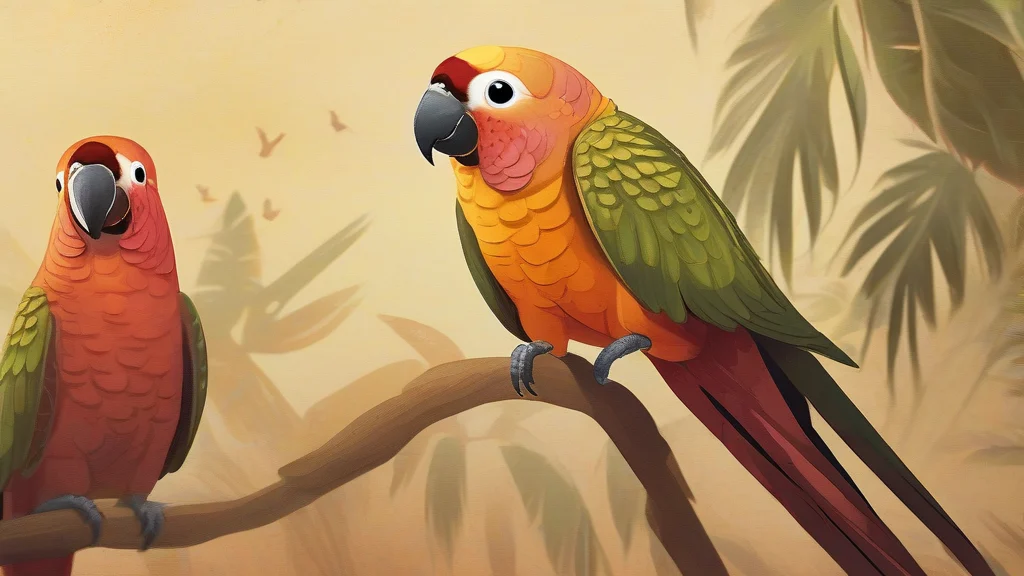
What does conure mean?
A conure is any of a number of small to medium-sized parrots with slender bodies and long tails, found naturally across Central and South America. The name embraces many distinct species — including well-known pet birds such as the green-cheeked conure and the brilliantly colored sun conure — rather than a single species. Conures are highly social, intelligent, and vocal; their playful, affectionate nature has made them favorites in aviculture, though their piercing calls can be challenging for owners. In ornithological and conservation contexts the term covers wild populations too, some of which, like Brazil's golden conure, are threatened by habitat loss and trapping. Because 'conure' describes a loose grouping rather than a strict taxonomic category, scientists sometimes debate exactly which species belong under the label. For most English speakers, the word arises only in connection with pet birds or bird conservation, and it has no figurative or idiomatic uses.
nounAny of various small to medium-sized long-tailed parrots native to Central and South America, popular in aviculture for their lively, affectionate temperament and loud calls.
- A small to medium-sized long-tailed parrot of several American genera (such as Aratinga and Pyrrhura), kept widely as a companion bird.
- In ornithology, any member of the conure group within the tribe Arini, encompassing numerous species including endangered ones such as the golden conure.
"Her green-cheeked conure whistled from its perch every time she opened the window."
"The sun conure's dazzling orange-and-yellow plumage makes it one of the most recognizable pet parrots in the world."
"Conservationists have worked for decades to protect the golden conure, which survives only in fragments of Brazil's Amazon forest."
Standard regular plural; used identically in British and American English when referring to multiple birds or multiple species.
"Wild flocks of conures can number in the dozens, filling the forest canopy with noise at dawn."
Named after a French word, the conure is one of the loudest pets per gram on Earth — a bird barely bigger than your hand whose scream can carry across an entire neighborhood.
Reviewed by Deb Chak, Editor. AI-assisted content curated by RJS Tech Solutions LLP.
Etymology of conure
The word 'conure' comes into English through French, where 'conure' was applied to these South American parrots; it is generally traced back through scientific Latin forms such as 'Conurus', built from Greek roots meaning 'dog-tailed' — a reference to the birds' long, tapering tails. The term entered general English usage in the nineteenth century as European naturalists described and classified the parrots of the Americas. Related coinages appear in other European languages that adopted the same French and Latin-derived naming tradition.
Related word forms
How conure is actually used
The word is used almost entirely in contexts relating to birds: aviculture (pet keeping), ornithology, and wildlife conservation. It carries no figurative or extended meanings. In casual speech among bird keepers it is fully standard; outside those circles it is a specialist term.
Easily confused with conure
A conure is a specific group of small long-tailed South American parrots, whereas 'parakeet' is a broad term covering many slender long-tailed parrot species worldwide, some of which are not conures.