What does coralberry mean?
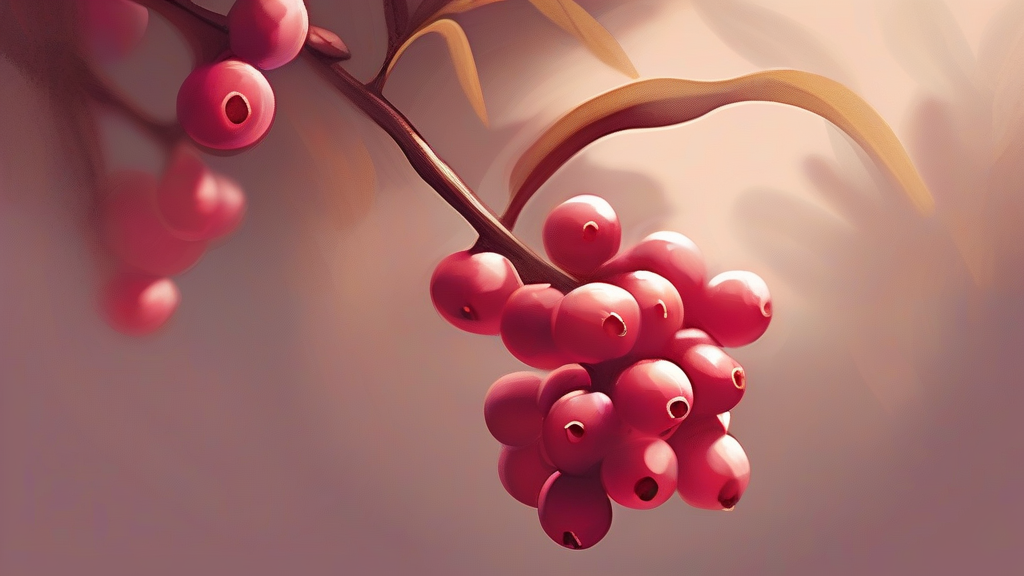
Coralberry is the common name for a hardy North American shrub, most precisely Symphoricarpos orbiculatus, a member of the honeysuckle family. Growing one to two metres tall, it produces arching stems lined with tiny bell-shaped flowers in summer, which give way to its defining feature: dense clusters of small, dull coral-pink berries that cling to the branches long after the leaves have fallen. This winter persistence makes the plant valuable both ornamentally and ecologically — game birds such as quail and songbirds rely on the berries as cold-season food, even though they are not considered palatable to humans. The name derives from the resemblance of the fruit to red coral beads. Gardeners use coralberry in native-plant borders, hedges, and erosion-control plantings, valuing its tolerance of poor, dry soil. The word appears chiefly in horticultural and wildlife writing, where it may also refer loosely to other plants with similar red berries, so careful identification matters.
A North American shrub (Symphoricarpos orbiculatus) of the honeysuckle family, bearing clusters of small coral-pink berries that persist into winter.
"A row of coralberry along the fence line kept the garden colourful all winter."
Also known regionally as buckbrush or Indian currant.
Loosely, any of various other plants with similar coral-red berries, especially Ardisia crenata.
"In Florida landscapes, 'coralberry' often refers to the glossy-leaved Ardisia rather than the northern shrub."
This broader application can cause naming confusion between regions.
Regular plural, used when referring to individual fruits rather than whole plants; the plants themselves are usually referred to as 'coralberry bushes' in the singular.
"The finches gobbled down the ripe coralberries in a matter of minutes."
The coralberry's berries aren't really for eating — they're a winter lifeline for birds and quail when everything else has frozen.
Reviewed by Deb Chak, Editor. AI-assisted content curated by RJS Tech Solutions LLP.
Etymology of coralberry
The word coralberry is a transparent English compound formed from 'coral' plus 'berry', first applied to plants whose beadlike red fruits recall precious coral. 'Coral' itself traces back through Old French and medieval Latin corallum to Greek korallion, denoting the red marine material prized since antiquity. As English speakers settled North America and catalogued its flora, the compound was extended to Symphoricarpos orbiculatus, joining related formations such as snowberry and wolfberry.
How coralberry is actually used
Most often encountered in botanical, gardening, and wildlife contexts rather than everyday conversation. In North America it is commonly called 'buckbrush' or 'Indian currant'; the name 'coralberry' is occasionally applied to unrelated plants such as Ardisia crenata, so context matters.
Easily confused with coralberry
Bearberry is a low-growing ground-cover plant of the genus Arctostaphylos with red berries, whereas coralberry is an upright deciduous shrub of the honeysuckle family.
Snowberries are white or pale berries on closely related Symphoricarpos species, while coralberry bears distinctly pinkish-red fruit.