
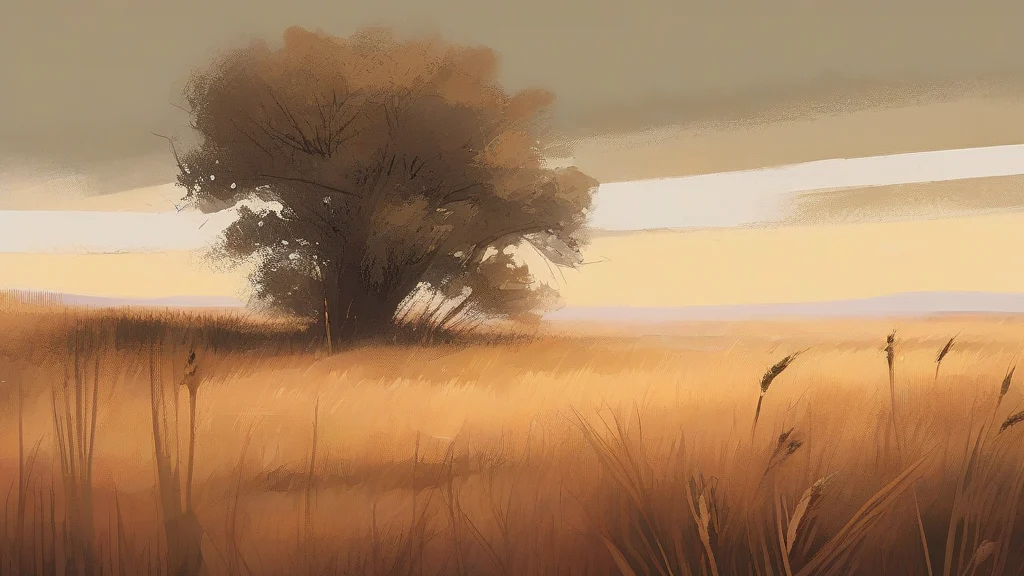
What does prairie mean?
A prairie is a broad, open expanse of grassland, generally with few trees and often gently rolling terrain. The word is most strongly associated with the Great Plains of central North America, where prairies have historically supported grazing, farming, and distinctive communities and wildlife, including bison and prairie dogs. In literature and historical writing, prairie often evokes the openness of the land, frontier settlement, and the difficulties of life on the grasslands. Although the word can sometimes describe any extensive treeless plain, it retains a particularly North American association. In British English, prairie is understood and used, but it is less frequent and less regionally specific than in North American usage. Its French origin and its connection with the Latin word for meadow are reflected in the broader historical name prairie for grassland regions.
nounA broad, open area of grassland, usually with few trees, especially in North America. The term can also refer more generally to an extensive treeless plain.
- A broad, open, usually treeless area of grassland, especially in central North America.
- An expansive, relatively level landscape characterized by grassland or open country.
"Wildflowers stretched across the prairie beneath a wide, cloudless sky."
"The wagon train crossed the open prairie as the sun set."
"The novel describes a pioneer family building a home on the prairie."
The standard plural is prairies.
"The prairies of the Midwest are home to grasslands that support bison and other wildlife."
The word prairie comes from French and ultimately from a Latin term for meadow, reflecting the grasslands that once covered vast areas of central North America.
Reviewed by Deb Chak, Editor. AI-assisted content curated by RJS Tech Solutions LLP.
Where does prairie come from?
Prairie entered English through Canadian and American usage in the early 19th century. It comes from Canadian French prairie, from Medieval Latin prataria, a term derived from Latin pratum, meaning meadow. The word was applied to the extensive grasslands of central North America, later becoming a familiar label for the Great Plains.
How prairie is actually used
In modern English, prairie is especially associated with the Great Plains of North America, though it can be used more broadly for open grassland. It is more common in North American English than in British English.
Easily confused with prairie
A prairie is an open grassland, especially in North America, whereas a steppe is a broad, treeless grassland or semi-desert region, especially in Eurasia.
A plain is a broad, relatively level area of land that may include grassland, desert, or other terrain, while a prairie specifically denotes grassland.