
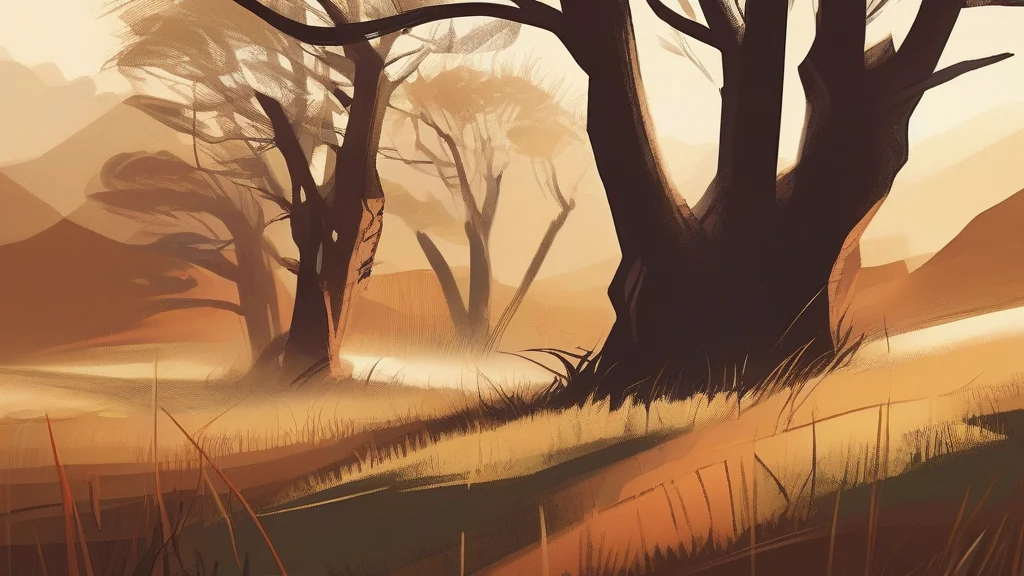
What does grassland mean?
Grassland is land covered chiefly by grasses and other low-growing vegetation. The term is used both for a specific tract of such country and for grassland as an ecosystem or biome, including tropical savannas and temperate prairies. In general writing it sounds more formal and ecological than “lawn” or “field,” while its countability follows context: “grassland” commonly functions as a mass noun, whereas “grasslands” refers to distinct regions or types of vegetation. Grasslands are significant habitats for wildlife, livestock, and plants adapted to seasonal drought, fire, and grazing pressure. The word is also useful in geography, ecology, agriculture, and conservation, where it distinguishes grass-dominated landscapes from forests, wetlands, and deserts. Knowing it helps readers recognize a major form of biome rather than treating all open green country as interchangeable.
nounLand covered chiefly by grasses and other low-growing vegetation. The term may denote a particular tract of grassy country or a grassland biome, such as a prairie or savanna.
- An open or semi-open area of land covered chiefly by grasses and other herbaceous vegetation.
- A biome or vegetation type dominated by grasses, such as a temperate prairie or tropical savanna.
"The valley's grasslands provide winter grazing for thousands of migrating animals."
"The conservation project restores native grassland habitat along the river."
"Heavy seasonal rains transform the African grassland into a temporary breeding ground for grazing animals."
The plural is used for distinct regions, biomes, or extensive examples of grass-covered terrain.
"The world's temperate grasslands are among the planet's most altered ecosystems."
Grassland names one of Earth's great biomes—not merely a lawn.
Reviewed by Deb Chak, Editor. AI-assisted content curated by RJS Tech Solutions LLP.
Where does grassland come from?
Grassland is a compound of “grass” and “land.” “Grass” descends from Old English gærs, while “land” descends from Old English land; both were established Germanic words before the compound developed. The related forms “graze,” “grazing,” and “grassy” reflect the same grass root, with meanings connected with eating or feeding on grass.
Related word forms
How grassland is actually used
The word is generally neutral but sounds more formal and ecological than terms such as “field.” It commonly functions as a mass noun when referring to grass cover or a habitat type, while the plural “grasslands” is used for distinct regions, biomes, or examples.